

- LP
- Pick Up
- Recommended
- New Release
Adam Rudolph
Invisible Threads
Omni Sound - Cat No: LPOS1010
- updated:2026-11-28
With its roots in the Mandingo Griot Society—which explored African music in the 1970s—the band has actively participated in numerous sessions and projects, including those led by Don Cherry, Pharoah Sanders, and Yusuf Lateef, among many others. In recent years, he has also been active in groups such as Hu Vibrational and Build An Ark. This album, “Invisible Threads,” led by the legendary Adam Rudolph, opens with the track “Dreaming of the Skyway.” Okay Temiz also appears on the album. It’s rich, wonderful music. The vinyl has arrived. (Saito)
Track List
Over the course of more than half a century, the visionary percussionist and composer Adam Rudolph has been a pioneer in weaving together inspirations and collaborators across cultures, traditions, backgrounds and styles.
Adam Rudolph — handrumset (congas, tarija), glockenspiel, cup gongs, kalimba, udu drums, caxixi, slit drum, 606 drum machine, mbuti harp, live electronic processing, percussion
Ahmet Hacı Tekbilek — ney
Jesper Egelund Pedersen — bass and electronics
Marco Cappelli — classical prepared guitar and electric guitar
Okay Temiz — tuned bells, cuica, waterphone, talking drum, thumb piano, darbuka, wood blocks, percussion
Özlem Kaya — violin
Sıla Gerbağ — bass and C flute
Sumru Ağıryürüyen — vocal
Recorded by Sinan Sakizli, October 7–8, Hayyam Studios, Istanbul.
Mixed & mastered by James Dellatacoma at Orange Music Sound Studio, NJ.
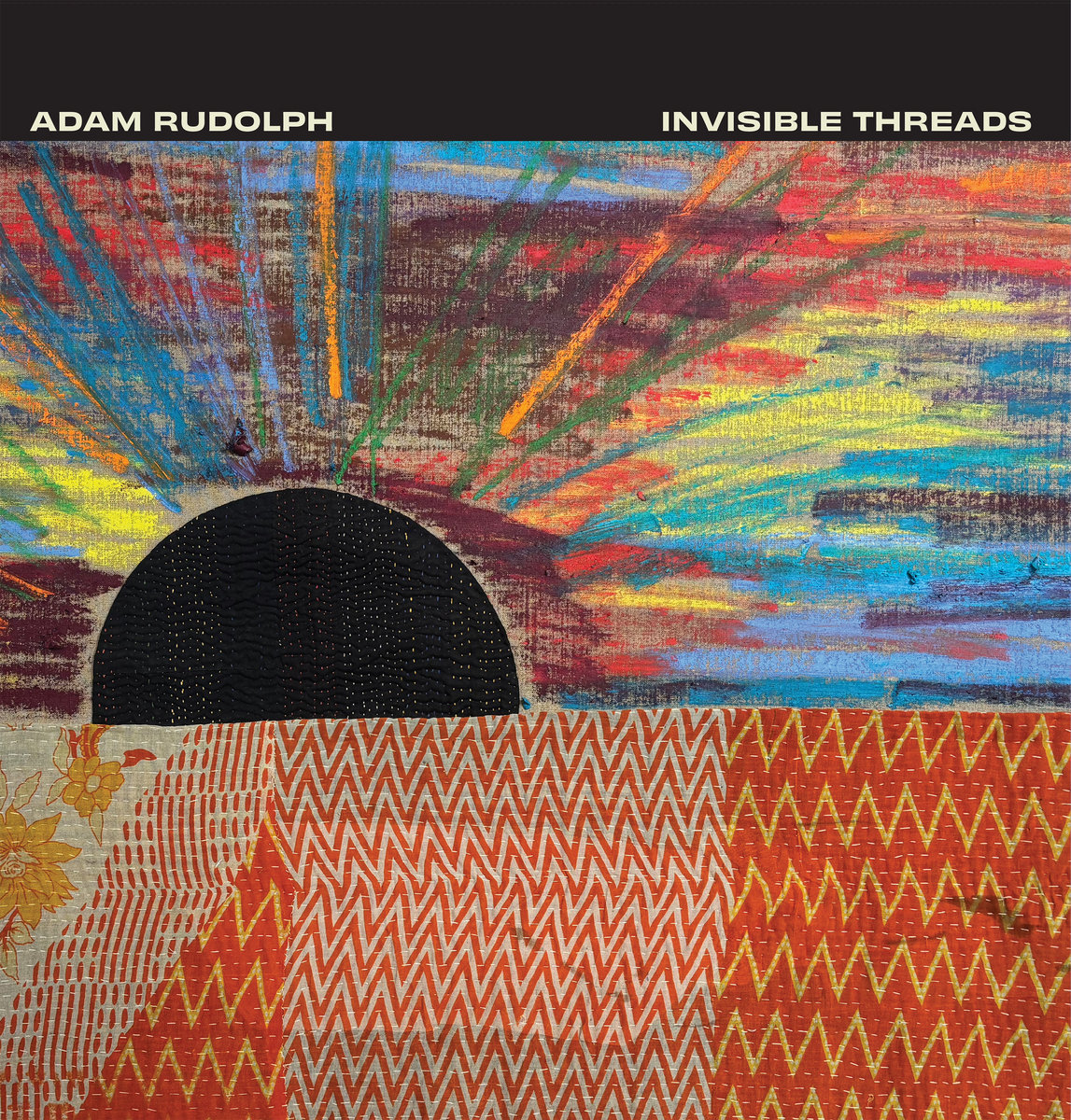
Cover artwork: Shezad Dawood.
Long-standing collaborations with the three major figures of spiritual jazz, Don Cherry, Yusef Lateef, and Pharoah Sanders, helped shape Rudolph's expansive musical philosophy, one rooted in improvisation, deep listening, and cultural exchange. As ever in Rudolph’s non-idiomatic vision, Invisible Threads is no mere fusion of musical traditions; instead, it is a journey of discovery shared and shaped by the merging of profoundly individual voices.
At the center of Invisible Threads is a constantly evolving sonic landscape shaped by Rudolph's live electronic processing, the electronic manipulations of Danish bassist and sound artist Jesper Pedersen, and the circuit-bending guitar work of Marco Cappelli.
The rest of the ensemble is from Türkiye where the album was recorded. Okay Temiz, the legendary percussionist whose groundbreaking work has connected Anatolian folk music with jazz and global improvisation for more than five decades, brings a playful inventiveness through bells, toys, found objects, and handcrafted instruments. Hacı Tekbilek is one of the most celebrated Sufi ney players globally, and a master of wind instruments rooted in devotional music traditions. His playing combines technical mastery with a profound sense of spirituality, drawing long, breath-filled tones and intricate melodic ornamentation.
Özlem Kaya's violin, Sıla Gerbağ's flute, and Sumru Ağıryürüyen's voice bring warmth, nuance, and expressive depth to the music. Their contributions move between melody, improvisation, and texture, creating an organic counterpoint to the project's rhythmic complexity and electronic soundscapes.
Together, the ensemble creates a sense of openness and emotional richness that is innately human while refusing to be anchored by familiar landmarks of culture or genre — a testament to music as a healing bridge across cultures, and to the power of collective creation to find meaning within unity.
Originally commissioned for the 35th anniversary Akbank Jazz Festival and dedicated to the late Mehmet Ulug.
▫️information▫️
『Over the course of more than half a century, the visionary percussionist and composer Adam Rudolph has been a pioneer in weaving together inspirations and collaborators across cultures, traditions, backgrounds and styles.
Adam Rudolph — handrumset (congas, tarija), glockenspiel, cup gongs, kalimba, udu drums, caxixi, slit drum, 606 drum machine, mbuti harp, live electronic processing, percussion
Ahmet Hacı Tekbilek — ney
Jesper Egelund Pedersen — bass and electronics
Marco Cappelli — classical prepared guitar and electric guitar
Okay Temiz — tuned bells, cuica, waterphone, talking drum, thumb piano, darbuka, wood blocks, percussion
Özlem Kaya — violin
Sıla Gerbağ — bass and C flute
Sumru Ağıryürüyen — vocal
Recorded by Sinan Sakizli, October 7–8, Hayyam Studios, Istanbul.
Mixed & mastered by James Dellatacoma at Orange Music Sound Studio, NJ.
Cover artwork: Shezad Dawood.
Long-standing collaborations with the three major figures of spiritual jazz, Don Cherry, Yusef Lateef, and Pharoah Sanders, helped shape Rudolph's expansive musical philosophy, one rooted in improvisation, deep listening, and cultural exchange. As ever in Rudolph’s non-idiomatic vision, Invisible Threads is no mere fusion of musical traditions; instead, it is a journey of discovery shared and shaped by the merging of profoundly individual voices.
At the center of Invisible Threads is a constantly evolving sonic landscape shaped by Rudolph's live electronic processing, the electronic manipulations of Danish bassist and sound artist Jesper Pedersen, and the circuit-bending guitar work of Marco Cappelli.
The rest of the ensemble is from Türkiye where the album was recorded. Okay Temiz, the legendary percussionist whose groundbreaking work has connected Anatolian folk music with jazz and global improvisation for more than five decades, brings a playful inventiveness through bells, toys, found objects, and handcrafted instruments. Hacı Tekbilek is one of the most celebrated Sufi ney players globally, and a master of wind instruments rooted in devotional music traditions. His playing combines technical mastery with a profound sense of spirituality, drawing long, breath-filled tones and intricate melodic ornamentation.
Özlem Kaya's violin, Sıla Gerbağ's flute, and Sumru Ağıryürüyen's voice bring warmth, nuance, and expressive depth to the music. Their contributions move between melody, improvisation, and texture, creating an organic counterpoint to the project's rhythmic complexity and electronic soundscapes.
Together, the ensemble creates a sense of openness and emotional richness that is innately human while refusing to be anchored by familiar landmarks of culture or genre — a testament to music as a healing bridge across cultures, and to the power of collective creation to find meaning within unity.
Originally commissioned for the 35th anniversary Akbank Jazz Festival and dedicated to the late Mehmet Ulug.』