"Rwandance," the new album by Hamburg-based sound engineer Andy Otto, is a collaboration with Rwandan artist Évariste Kalinganière. It is released by SHIKA SHIKA, run by Bario Lindo.
Otto is also a performer on “Fero,” a homemade electronic instrument he created by modifying a cello. For this project, he developed software that converts Karinganière’s handclaps into synthesized sounds. The backbone of this work is the fusion of traditional Rwandan musical structures and time signatures with the framework Otto has built. Furthermore, he says he was influenced by his experience accessing a vast archive of Rwandan music while producing soundtracks, as well as by Mark Pritchard’s attempts to fuse African music with electronics using the Harmonic 313.
The interplay between Karinganière’s shamanic vocals (recorded in one take), Otto’s assiduous bass programming, and “Fero” feels like the result of a mental exercise in minimalist music—distinct from the spirituality of South American electric folklore or the hippie-esque psychedelia associated with Voodoohop. the result of the intellectual discipline of minimalist music. As your ears grow accustomed to the minimalism and you slip into a state of euphoric intoxication, the way Kalinganier’s voice returns in the latter half feels like watching an epic tale—a delight to experience throughout the album. As intended, listening to it repeatedly is fascinating, as your impressions shift in colorful ways that contrast with the album artwork.
This could be seen as an evolution of the “voice and electronics” approach first explored on the album *VIA*, which featured the underground hit “Bangalore Whispers.” Furthermore, you can sense the depth gained through last year’s “BOW” release on MultiCulti and his activities with PINGIPUNG—the hub for rediscovering Umeko Ando in Europe.
Her exploration of global sounds and soundscapes has only just begun. I believe this challenge and its results will resonate deeply with all fans of organic dance music.
(Original Japanese text by Shhhhh)



Otto is also a performer on “Fero,” a homemade electronic instrument he created by modifying a cello. For this project, he developed software that converts Karinganière’s handclaps into synthesized sounds. The backbone of this work is the fusion of traditional Rwandan musical structures and time signatures with the framework Otto has built. Furthermore, he says he was influenced by his experience accessing a vast archive of Rwandan music while producing soundtracks, as well as by Mark Pritchard’s attempts to fuse African music with electronics using the Harmonic 313.
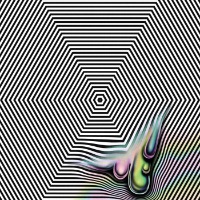
The interplay between Karinganière’s shamanic vocals (recorded in one take), Otto’s assiduous bass programming, and “Fero” feels like the result of a mental exercise in minimalist music—distinct from the spirituality of South American electric folklore or the hippie-esque psychedelia associated with Voodoohop. the result of the intellectual discipline of minimalist music. As your ears grow accustomed to the minimalism and you slip into a state of euphoric intoxication, the way Kalinganier’s voice returns in the latter half feels like watching an epic tale—a delight to experience throughout the album. As intended, listening to it repeatedly is fascinating, as your impressions shift in colorful ways that contrast with the album artwork.
This could be seen as an evolution of the “voice and electronics” approach first explored on the album *VIA*, which featured the underground hit “Bangalore Whispers.”
Furthermore, you can sense the depth gained through last year’s “BOW” release on MultiCulti and his activities with PINGIPUNG—the hub for rediscovering Umeko Ando in Europe.
Her exploration of global sounds and soundscapes has only just begun. I believe this challenge and its results will resonate deeply with all fans of organic dance music. (Original Japanese text by Shhhhh)