

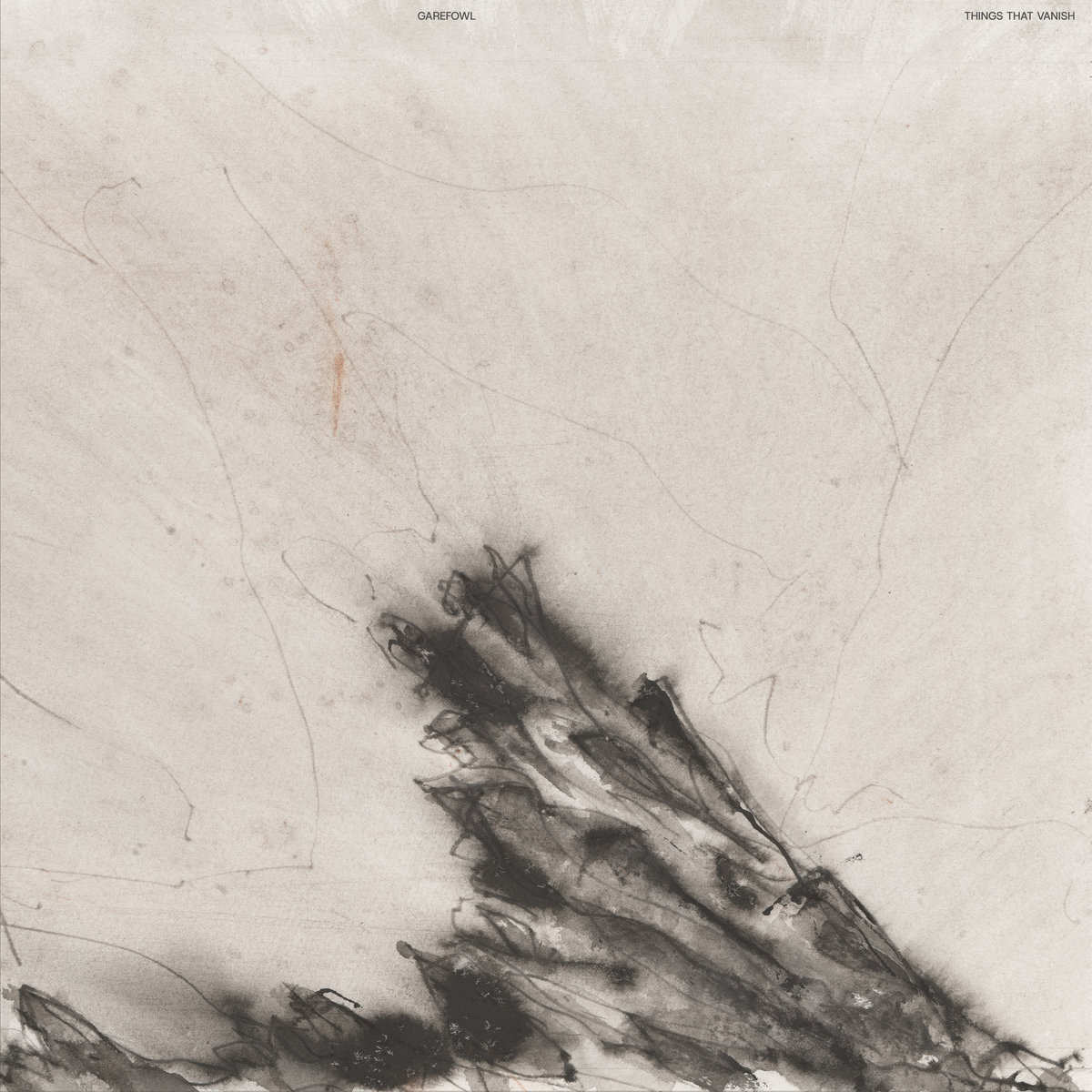
- LP
- Recommended
Garefowl
Things That Vanish
AD 93 - Cat No: WHYT130LP
- updated:2026-11-19
Traditional avant-garde folk music in which phrases played on folk instruments that reflect the spirit of St. Kilda drift alongside a prism of drones created from processed field recordings collected on the island. Based on the history of a clan related by blood to the man who killed the region’s last great cormorant, this musical project—conceived by Ewan Macdonald and his father Murdo—is now released as Garefowl’s second album via AD 93. Garefowl is an international collective of musicians that combines string instruments with electronics.
Track List
*Things That Vanish* is a work recorded at night on Hirta, the main island of the St. Kilda archipelago, located off the northwest coast of Scotland. The sounds that shape Hirta’s landscape breathe life into the entire album. The gently rolling wind and waves, the calls of birds, and the otherworldly sounds produced by the woodcock. The tracks, inspired by the traditional folk music of St. Kilda, are named after the endangered seabirds inhabiting the islands (the Western Horned Puffin, the Common Murre, Little Shearwater, Common Murre, Storm Petrel, Three-toed Gull, White-tailed Tropicbird, Great Black-backed Gull, and Fulmar) that inhabit the islands.
The band was drawn to the folklore surrounding these birds and the fact that they have often been portrayed as primal, dark, and somewhat eerie creatures. In these tales, the birds take on characteristics reminiscent of sea monsters. While they are described as predators that attack calves and sheep, they have also been believed to be the souls of drowned sailors or the incarnations of spirits born from curses cast upon cruel captains.
No synthesizers were used at all in the recording of this album. The production relies solely on sampled and processed sounds from field recordings and hydrophone (underwater microphone) recordings collected in St. Kilda. Furthermore, drones were generated using a technique independently developed by Richard O’Flynn and Joe Gardner. Rock and bone samples were analyzed using X-ray diffraction (XRD) to extract spectra featuring peaks corresponding to the materials’ chemical compositions. By converting these spectra into sine waves, sustained drone sounds were created. In other words, this is also an attempt to translate the chemical composition of the rocks and bones themselves into sound.