- Digital
King Ayisoba
Dey Come
Mais Um
- Cat No: MAIS065C
- Release: 2026-08-26
- updated:
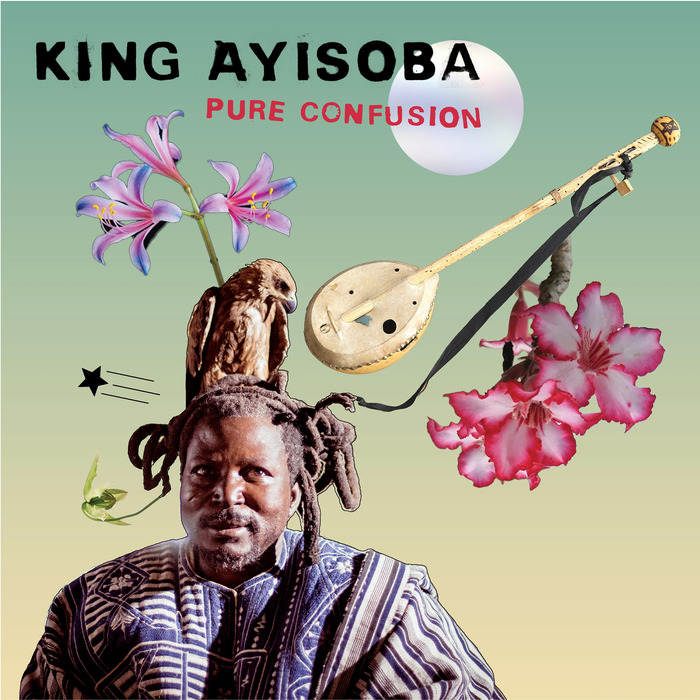
Pioneering Ghanaian musician King Ayisoba returns with “Dey Come”, the latest single from his forthcoming album Pure Confusion, released September 4 via Mais Um.
Produced by legendary British producer Adrian Sherwood, “Dey Come” is built around Ayisoba's hypnotic kologo playing and distinctive multi-voiced delivery, fusing northern Ghanaian musical traditions with Sherwood's adventurous studio production.
Ayisoba and Sherwood first collaborated during a BBC Radio 3 Late Junction session at Maida Vale in 2017, organised by Ayisoba’s long-time collaborator Arnold de Boer/Zea of The Ex. The pair immediately connected, and during the pandemic, when Adrian’s long-time African Head Charge collaborator Bonjo Iyabinghi Noah was in Ghana looking for musicians to collaborate with Sherwood suggested Ayisoba, who eventually featured on two tracks on African Head Charge’s 2023 album A Trip To Bolgatanga (Bolgantanga is the region Ayisoba is from). Ayisoba then returned to the UK in late 2024 and travelled to Sherwood’s Ramsgate studio where the pair laid down the songs that would become Pure Confusion: “All the songs were already in my head,” says Ayisoba. “This album is all recorded live, over one afternoon.” “In my role producing it, I just let it roll to make a good vibe,” says Sherwood. “We recorded it completely live, did some programming and processing on some tracks, using dub techniques live on the mixing desk and adding some slick touches.”
Ayisoba is one of Ghana's most distinctive musical voices. The world's foremost player of the kologo – a homemade two-string lute fashioned from a calabash and covered in goatskin – he delivers fiercely political and socially observant songs using three different voices, including the voice of his grandfather that possessed him as a child.
Sherwood meanwhile is the pioneering British producer and founder of On-U Sound whose hugely influential career has connected dub, post-punk, industrial, hip hop and experimental music through collaborations with artists including Lee “Scratch” Perry, Mark Stewart, Horace Andy, Sinéad O'Connor, Nine Inch Nails and Depeche Mode.
For more than two decades, King Ayisoba has been one of Africa's most distinctive musical innovators, transforming northern Ghanaian kologo traditions into a bold contemporary sound rooted in hypnotic rhythms, social commentary and spiritual intensity. Since the breakthrough success of 2006's Modern Ghanaians, Ayisoba has built an international following through acclaimed albums, relentless touring and collaborations with artists including Lee “Scratch” Perry, Orlando Julius and African Head Charge.
Born in Bolgatanga in rural northern Ghana in 1974, King Ayisoba descended from a Fra Fra hunting tribe. A prodigy on the kologo, the instrument quickly became “like an extended part of his body”, with not a single day passing without him playing.
His debut album Modern Ghanaians took Ghana by surprise in 2006, while subsequent albums including 1000 Can Die and Work Hard helped establish him internationally as one of Africa's most original and uncompromising musical voices. Performances at Roskilde, WOMAD, Le Guess Who? and the Barbican have further cemented his reputation as a singular live performer and cultural force.
Produced by legendary British producer Adrian Sherwood, “Dey Come” is built around Ayisoba's hypnotic kologo playing and distinctive multi-voiced delivery, fusing northern Ghanaian musical traditions with Sherwood's adventurous studio production.
Ayisoba and Sherwood first collaborated during a BBC Radio 3 Late Junction session at Maida Vale in 2017, organised by Ayisoba’s long-time collaborator Arnold de Boer/Zea of The Ex. The pair immediately connected, and during the pandemic, when Adrian’s long-time African Head Charge collaborator Bonjo Iyabinghi Noah was in Ghana looking for musicians to collaborate with Sherwood suggested Ayisoba, who eventually featured on two tracks on African Head Charge’s 2023 album A Trip To Bolgatanga (Bolgantanga is the region Ayisoba is from). Ayisoba then returned to the UK in late 2024 and travelled to Sherwood’s Ramsgate studio where the pair laid down the songs that would become Pure Confusion: “All the songs were already in my head,” says Ayisoba. “This album is all recorded live, over one afternoon.” “In my role producing it, I just let it roll to make a good vibe,” says Sherwood. “We recorded it completely live, did some programming and processing on some tracks, using dub techniques live on the mixing desk and adding some slick touches.”
Ayisoba is one of Ghana's most distinctive musical voices. The world's foremost player of the kologo – a homemade two-string lute fashioned from a calabash and covered in goatskin – he delivers fiercely political and socially observant songs using three different voices, including the voice of his grandfather that possessed him as a child.
Sherwood meanwhile is the pioneering British producer and founder of On-U Sound whose hugely influential career has connected dub, post-punk, industrial, hip hop and experimental music through collaborations with artists including Lee “Scratch” Perry, Mark Stewart, Horace Andy, Sinéad O'Connor, Nine Inch Nails and Depeche Mode.
For more than two decades, King Ayisoba has been one of Africa's most distinctive musical innovators, transforming northern Ghanaian kologo traditions into a bold contemporary sound rooted in hypnotic rhythms, social commentary and spiritual intensity. Since the breakthrough success of 2006's Modern Ghanaians, Ayisoba has built an international following through acclaimed albums, relentless touring and collaborations with artists including Lee “Scratch” Perry, Orlando Julius and African Head Charge.
Born in Bolgatanga in rural northern Ghana in 1974, King Ayisoba descended from a Fra Fra hunting tribe. A prodigy on the kologo, the instrument quickly became “like an extended part of his body”, with not a single day passing without him playing.
His debut album Modern Ghanaians took Ghana by surprise in 2006, while subsequent albums including 1000 Can Die and Work Hard helped establish him internationally as one of Africa's most original and uncompromising musical voices. Performances at Roskilde, WOMAD, Le Guess Who? and the Barbican have further cemented his reputation as a singular live performer and cultural force.