- Digital
Various Artists
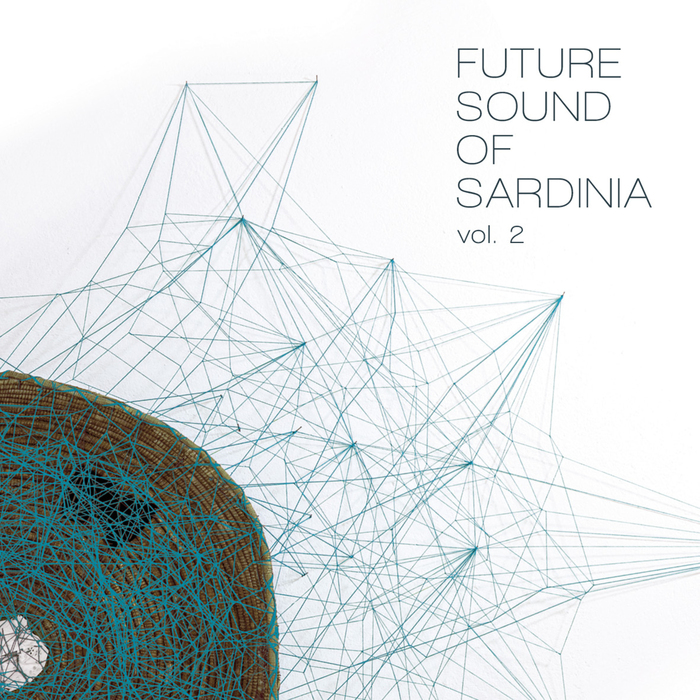
Future Sound of Sardinia Vol. 2
FormResonance
- Cat No: FR066
- Release: 2026-11-18
- updated:
Track List
-
1. Riu Mutrucone - Jannemuru
00:03:26 -
2. Agi Thoriu - Pizzinas Bolendi
00:05:58 -
3. J.A.R.P.P. - Will it Be
00:06:14 -
4. Bettosun - Back Jazz
00:06:55 -
5. Mr. ThruouT - With you now
00:06:52 -
6. Matteo Girometti aka Matrukk - Come to Me
00:06:32 -
7. JMC - Blue Night
00:07:40 -
8. Massimo Ramon - Make to the Beat
00:06:20 -
9. SRA - We`re never happy
00:04:40 -
10. Roland against the maschine - Brutta
00:06:04
16bit/44.1khz [wav/flac/aiff/alac/mp3]
FR066 -
FUTURE SOUND OF SARDINIA Vol 2
www.formresonance.com
What do a gold ring, a flight of marble stairs and a copper pot have in common?
They are objects whose essential form has endured. Ancient in origin yet entirely present, they represent a lasting relationship between material, function and beauty. They have survived not because of nostalgia, but because little has been invented that truly replaces them.
The same can be said of the vinyl record.
At a time when music has become increasingly immaterial, vinyl remains an object through which sound acquires physical presence. It can be touched, carried, collected, exchanged and preserved. Its grooves contain music not as an abstract stream of data, but as a physical inscription. Selected and compiled by Livio Pinna & treated with care, a record can outlive generations.
And vinyl is no longer simply the domain of nostalgic collectors. In Italy, as elsewhere, its resurgence points towards something deeper: the desire to give music permanence again.
With Future Sound of Sardinia, FormFesonance turns its attention to an island whose electronic music culture has long reached far beyond its geographical borders.
For decades, DJs and record collectors have kept vinyl culture alive, and it therefore seemed only natural to document this particular generation of Sardinian electronic artists in the medium that has accompanied club culture throughout its history: a high-quality vinyl release made to be played.
The compilation brings together ten tracks and ten individual perspectives. What connects them is not a single genre or aesthetic doctrine, but a place of origin.
Sardinia is an island, yet its musical identity has never existed in isolation. Many of the artists represented here operate internationally. Some have made Berlin-the long-standing epicentre of European electronic subculture-their creative base; others have travelled and worked much further afield. They might be understood as Sardinian sonic migrants: artists carrying traces of an island culture into an international musical language.
There is something distinctly Mediterranean running beneath these tracks: fluidity, depth, rhythm, ritual and an instinctive relationship between the archaic and the contemporary. Traditional voices and ethnic references coexist with synthesizers, drum machines, house rhythms, techno structures, electro and dark pop. Rather than treating tradition as decoration, Future Sound of Sardinia allows these different musical histories to encounter one another.
The result is neither folklore translated into electronics nor an exercise in retro-futurism. It is a document of Sardinian electronic music as it exists now-and a proposition for where it might go next.
THE TRACKS
01 - Riu Mutrucone - "Jannemuru"
The compilation opens with perhaps its greatest leap into the future.
Riu Mutrucone arrives as a completely new artist, making his debut at just nineteen years old. "Jannemuru" immediately reveals a remarkably assured musical language: bright, expansive and cinematic, with orchestral and Eastern-inflected elements woven into an electronic framework.
Rather than relying on density, the track creates its impact through clarity. Individual sounds occupy their own space, while acoustic detail and electronic construction meet in an atmosphere that feels simultaneously intimate and panoramic.
There is a striking sense of depth to the recording-music conceived not simply as a sequence of events, but as an environment. It is an unusually accomplished first statement from a young Sardinian producer and an appropriate opening for a compilation concerned not with preserving a regional sound, but with imagining its future.
Mastered in Sardinia by Gabriele Pinna, "Jannemuru" establishes the sonic ambition of the record from its first moments.
02 - Agi Thoriu - "Pizzinnas Bolendi"
With Agi Thoriu, the relationship between electronic music and Sardinian cultural memory moves directly to the foreground.
"Pizzinnas Bolendi" combines original chant recordings and ethnic sonic elements with electronic rhythm, gradually transforming the track into something resembling a contemporary tribal gathering. Voices appear not as ornamental samples but as carriers of collective memory, circling around the pulse as the energy steadily rises.
Repetition becomes ritual. Chant becomes rhythm. Rhythm approaches trance.
Underneath it all sits a rounded, warm and physically present bass drum, giving the track the weight required for a large sound system without sacrificing the organic character of its source material. The result occupies a compelling space between ancestral expression and contemporary club culture.
Rather than reproducing tradition, Agi Thoriu allows it to enter into dialogue with the machine.
03 - J.A.R.P.P. - "Will It Be"
J.A.R.P.P. - Just a Record Player Player - changes the perspective with "Will It Be", moving towards the raw immediacy of classic house music.
There is an unmistakable old-school physicality here: a stomping groove, direct drums and the kind of rhythmic economy associated with the formative languages of Chicago, Detroit and early UK house. Echoes of artists such as A Guy Called Gerald and Boo Williams can be felt in its DNA, but "Will It Be" never settles for imitation.
Instead, J.A.R.P.P approaches those references as a living vocabulary.
The track has the curious familiarity of something you feel you might already know, even on first encounter. That quality is difficult to manufacture. It belongs to records that understand the dance floor instinctively: no unnecessary gestures, no excessive explanation, just groove, pressure and movement.
A new track with the confidence of an old record-a potential classic born outside its supposed era.
04 - Bettosun - "Back Jazz"
At 126 BPM, Benedetto Floris, aka Bettosun, pushes the compilation into a more hypnotic techno dimension.
"Back Jazz" unfolds through persistent rhythm, mesmerising synthesizer figures and the mechanical elegance of classic drum-machine architecture. Yet beneath its apparent discipline lies continual movement. Elements emerge, recede and recombine, producing the sensation of a track that is constantly opening another door without ever abandoning its central groove.
The result is techno understood as a state of concentration: repetitive without becoming static, functional without becoming anonymous.
That sense of connection also reflects Floris himself. Beyond his work as an artist, Bettosun has become a recognised connector and entrepreneur within Italy's electronic music and radio landscape, helping sounds, artists and audiences encounter one another.
"Back Jazz" translates that instinct into music: different histories of electronic sound converging inside one hypnotic continuum.
05 - Mr. ThruouT - "With You Now"
appearing as Mr. ThruouT, introduces another debut to Future Sound of Sardinia.
"With You Now" immediately distinguishes itself through its musical openness. Voice and instrumentation move beyond the conventional vocabulary of a purely club-oriented production, creating a track whose emotional dimension is as important as its rhythmic architecture.
His mesmerising vocal presence gives the music a human centre. Around it, distinctive instrumental details appear with an almost intuitive sense of timing-entering precisely when the composition requires another emotional colour.
Nothing feels forced. Instead, the track gradually reveals itself as a journey in which electronic production and songwriting occupy the same space.
For a debut, "With You Now" feels remarkably unconcerned with announcing a fixed identity. Its strength lies precisely in that freedom: the suggestion that many musical directions remain possible.
06 - Matrukk - "Come to Me"
Electronic music has spent more than half a century celebrating the freedom of frequencies.
Since the 1970s, entire genres have been invented, codified, revived and occasionally exhausted. The challenge for contemporary electronic musicians is therefore not simply to reproduce the future once imagined by previous generations, but to find a new position within that history.
With "Come to Me", Matrukk does exactly that.
The track occupies an intriguing territory somewhere between the machine precision associated with Kraftwerk, darker electronic pop and a more contemporary, emotionally ambiguous club aesthetic. Its references are recognisable without becoming restrictive. Instead of presenting electronic history as a museum, Matrukk treats it as raw material.
There is darkness here, but also seduction; control, but also a certain mischievous freedom.
"Come to Me" feels less like the conclusion of an aesthetic than the beginning of one. There is clearly more territory for Matrukk to explore.
07 - JMC - "Blue Night"
Some tracks begin long before you consciously notice them.
You enter a club. The room is already moving. The sound system has taken control of the architecture, conversations have dissolved into rhythm, and somewhere inside that transition from evening to night, JMC's "Blue Night" makes perfect sense.
He builds the track around a direct, forward-moving beat before introducing its defining element: a powerful vocal performance that changes the emotional scale of the entire production.
Recorded live in Sardinia, the voice brings warmth, soul and human unpredictability into the precision of the electronic framework. What begins as a club track suddenly becomes something larger.
The contrast is crucial. Machine rhythm provides the momentum; the vocalist provides the release.
"Blue Night" captures that particular moment every great club night searches for-the instant when a functional groove unexpectedly becomes emotional and the room reaches its peak.
08 - Massimo Ramon - "Make to the Beat"
House music has always possessed a particular kind of warmth.
Massimo Ramon understands that quality, but "Make to the Beat" does not simply reconstruct a remembered golden age. Chopped samples, compact funk gestures and a lush underlying groove are assembled with enough friction and movement to keep the track firmly in the present.
There is pleasure in its directness. The rhythm knows where it wants to go, while short fragments continually animate the surface.
And then there is the organ: unapologetically large, unmistakably house and impossible to ignore.
In lesser hands, these ingredients could easily become an exercise in revivalism. Ramon instead uses the established language of house as a foundation from which to move forward. Familiarity becomes a source of energy rather than nostalgia.
Warm, immediate and exceptionally playable, "Make to the Beat" demonstrates why house remains one of electronic music's most durable forms.
09 - SRA - "We're Never Happy"
With SRA, the atmosphere darkens.
"We're Never Happy" is a solid, persistent techno ride whose emotional tension develops through accumulation rather than spectacle. Once the track establishes its trajectory, it refuses to let go.
The darkness here is not merely a question of timbre. There is an emotional undertow beneath the mechanics, giving the production a sense of forward motion that is psychological as much as rhythmic.
SRA allows repetition to do the work. Pressure builds gradually, details acquire significance through recurrence, and the listener becomes increasingly absorbed in the track's internal logic.
Within the wider formresonance catalogue, it finds a natural resonance with the label's more hypnotic and emotionally charged releases, including the GUSGUS remix for Wareika.
"We're Never Happy" is techno as sustained movement: dark, focused and difficult to escape once the journey has begun.
10 - Roland Against the Maschine - "Brutta"
The compilation closes without restraint.
Roland Against the Maschine delivers "Brutta", a relentless electro cut built for the moment when subtlety is no longer required.
The groove staggers, pushes and provokes. There is something deliberately cheeky about the track, an attitude that prevents its considerable power from becoming overly severe. "Brutta" knows exactly what it is designed to do: create movement.
Yet beneath its immediate party energy lies a strong musical foundation. The apparent wildness is controlled; the impact comes from an artist with a profound musical background and the experience to know when precision matters and when a track needs to break loose.
The result is both playful and forceful-a genuine party weapon and a fitting final statement for Future Sound of Sardinia.
After ten different approaches to the island's electronic identity, "Brutta" sends the record back to the place where much of this music ultimately proves itself:the dance floor.
Future Sound of Sardinia is an attempt to define "Sardinian electronic music."
Across these ten tracks, Sardinia appears not as a stylistic restriction but as a common point of departure. The artists move through house, techno, electro, dark pop, orchestral electronics, voices, samples, acoustic recordings and machine rhythms. Some look towards musical history; others towards forms that have not yet acquired a name.
What binds them is an attitude shaped by an island which exists through ongoing exchange and independence. At the same time, you arrive with sounds: A rootedness and movement is present throughout this record.
Their music carries Sardinia without requiring Sardinia to become a genre.
These ten tracks become something physical: ten contemporary signals cut into a material capable of surviving the technology that produced them.
A document of a place. A record for the world.
Future Sound of Sardinia Vol 2 - FR066 - www.FormResonance.com
Releasedate: 18.11.2026
Press enquiries: florian@formresonance.com
Booking: livio@4-appeal.com