- Digital
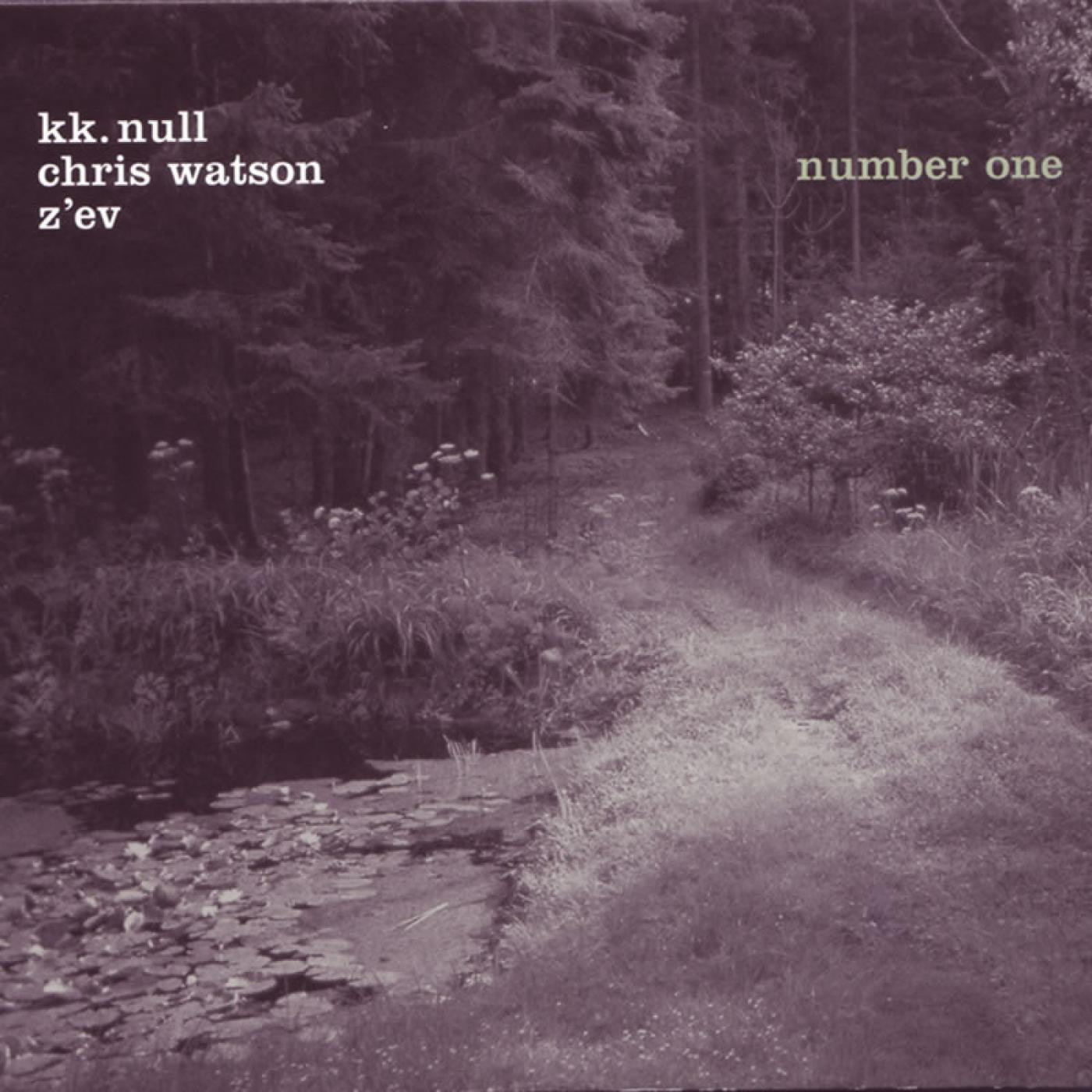
KK.NULL, Chris Watson & Z'EV
Number One
Touch
- Cat No: TONE24
- Release: 2006-02-06
- updated:
Track List
-
1. KK.NULL, Chris Watson & Z'EV - Invocation
08:20 -
2. KK.NULL, Chris Watson & Z'EV - Introduction
09:44 -
3. KK.NULL, Chris Watson & Z'EV - Development
12:03 -
4. KK.NULL, Chris Watson & Z'EV - Climax
09:40 -
5. KK.NULL, Chris Watson & Z'EV - Conclusion
08:28
16bit/44.1khz [wav/flac/aiff/alac/mp3]
Z'EV writes: 'In March of 2003 seeing my friends Stephen & Josephine in Los Angeles they suggested that i get in touch with japanese composer/performer KK.NULL. There followed a string of weird email
occurrences which delayed our communicating until, as it turned out, we eventually met in Paris on 18 November.After his performance we were talking about a possible collaboration and during his set a possibility had occurred to me. I ran the idea by him and we agreed to proceed with it. The idea had 3 elements: 1 - to use the structure of the NOH THEATRE cycle as the basis for the composition. 2: to consider the initial sound development in terms of developing 'characters' which would then interact with one another through the specific 'scene' [which is a fairly non-traditional way to work with sound elements] and 3: to place the 'character interactions' as the 'figure' inside of particular sound-scapes as the 'ground'.
So in January 2004 I returned to London and began to work on my initial character developments. Coincidentally at this time I eceived a copy of a CD compilation i had a piece on which was released by TOUCH, which also had a piece by Chris Watson. So i got on the phone to TOUCH who put me in touch with Chris who has joined in on the project.
Sometime after I had completed mixing the 5 pieces, I sent a copy to my friend Boyd Rice. He emailed me back: 'This is the first avant- garde piece I have heard in years that is truly avant-garde.'
In the production process, Z'EV framed his and KK.NULL's electro- acoustic musics inside Chris Watson's field recordings from East Africa. A dynamic dialogue and inside-outside mirroring of natural and synthetic sound is the result: where the click and rhythm of an insect merges with KK.NULL's drumming; where the calls of the elephants combine with the electronic bass frequencies; where bird and frog song and Z'EV's harmonic structures produces surprising counterpoints.'
occurrences which delayed our communicating until, as it turned out, we eventually met in Paris on 18 November.After his performance we were talking about a possible collaboration and during his set a possibility had occurred to me. I ran the idea by him and we agreed to proceed with it. The idea had 3 elements: 1 - to use the structure of the NOH THEATRE cycle as the basis for the composition. 2: to consider the initial sound development in terms of developing 'characters' which would then interact with one another through the specific 'scene' [which is a fairly non-traditional way to work with sound elements] and 3: to place the 'character interactions' as the 'figure' inside of particular sound-scapes as the 'ground'.
So in January 2004 I returned to London and began to work on my initial character developments. Coincidentally at this time I eceived a copy of a CD compilation i had a piece on which was released by TOUCH, which also had a piece by Chris Watson. So i got on the phone to TOUCH who put me in touch with Chris who has joined in on the project.
Sometime after I had completed mixing the 5 pieces, I sent a copy to my friend Boyd Rice. He emailed me back: 'This is the first avant- garde piece I have heard in years that is truly avant-garde.'
In the production process, Z'EV framed his and KK.NULL's electro- acoustic musics inside Chris Watson's field recordings from East Africa. A dynamic dialogue and inside-outside mirroring of natural and synthetic sound is the result: where the click and rhythm of an insect merges with KK.NULL's drumming; where the calls of the elephants combine with the electronic bass frequencies; where bird and frog song and Z'EV's harmonic structures produces surprising counterpoints.'