- Digital
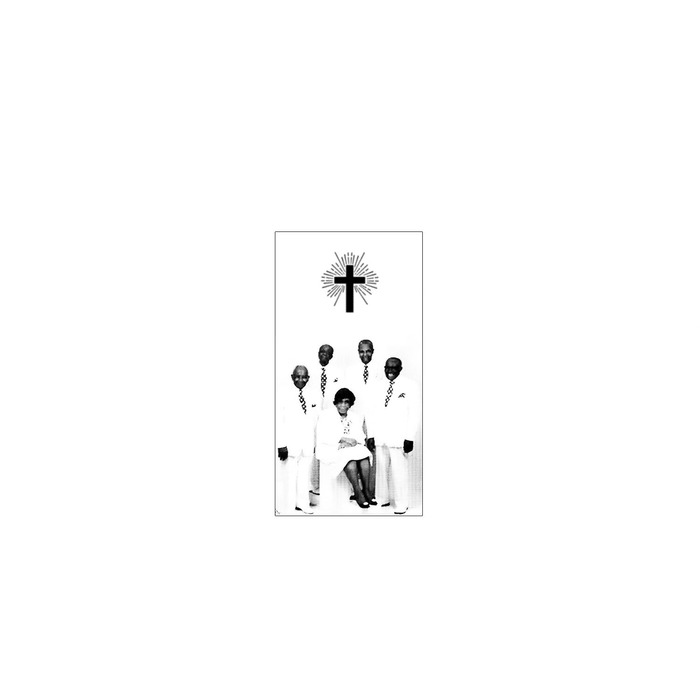
The Sterling Jubilee Singers
Jesus Hits Like the Atom Bomb: Gospel Quartet Singing in Jefferson County, Alabama
Death Is Not The End
- Cat No: DEATH129
- Release: 2026-07-03
- updated:
Track List
-
1. The Sterling Jubilee Singers - Jesus Hits Like the Atom Bomb
02:59 -
2. The Sterling Jubilee Singers - Devotional
00:54 -
3. The Sterling Jubilee Singers - Peace in the Valley
07:00 -
4. The Sterling Jubilee Singers - God Shall Wipe All Tears Away
03:29 -
5. The Sterling Jubilee Singers - Little Wooden Church on The Hill
03:58 -
6. The Sterling Jubilee Singers - The Lords Prayer
03:12 -
7. The Sterling Jubilee Singers - Will He Welcome Me There
04:49 -
8. The Sterling Jubilee Singers - Job
02:54 -
9. The Sterling Jubilee Singers - I Never Heard a Man
04:36 -
10. The Sterling Jubilee Singers - My Jesus Knows
04:17 -
11. The Sterling Jubilee Singers - Every Time I Try To Do My Best
05:22 -
12. The Sterling Jubilee Singers - Operator
02:46 -
13. The Sterling Jubilee Singers - Testimony
02:29 -
14. The Sterling Jubilee Singers - Benediction
00:30
16bit/44.1khz [wav/flac/aiff/alac/mp3]
"The Sterling Jubilee Singers were founded in 1929 during a vibrant period when large numbers of African-American men who worked in Jefferson County's steel mills and ore mines were forming gospel quartets. African-American a cappella quartet traditions were already generations old in the South when the movement became popular in Birmingham during the 1920s. These traditions have deep roots in nineteenth-century American folk and popular culture. The local quartet activity had its incubation in the mining camps, company quarters, and other segregated black industrial settlements, and was in part a product of the rich fellowship that survived and was enjoyed in those oppressive environs. The original Sterling Jubilees were trained by singing master Charles Bridges, who was a strong force in shaping the Jefferson County a cappella quartet style. The founding members and most of those joining later were union men who worked for U.S. Pipe and other steel-related companies. During the 1940s and '50s they performed at union functions and on local radio programs as the CIO Singers and under that name recorded "The Spirit of Phil Murray," an original song commemorating the death of the first president of the steelworkers union... In the late 1950s gospel music began to feel the influence of instrumentally-based rock and roll and soul music, but the Sterling Jubilees persevered as an a cappella quartet".
—Doug Seroff, On The Battlefield: Gospel Quartets in Jefferson County, Alabama, 1997.
At the heart of the Sterling Jubilee's success and longevity is their weekly highly-structured rehearsal. Following an agenda formed early in the group's history, they open with a reverential song such as "Did You Stop to Pray This Morning?" or "One Morning Soon," recite the Lord's Prayer in unison, then individually quote Bible verses. A second song precedes a business meeting, which is conducted in the formal language of parliamentary procedure. Rehearsals are often intense. John Alexander says, "You have to get into it like you are going to eat it. When you get ready to go out, it ain't hard to do right. If you did it right before you leave rehearsal, you've got it." Before leaving, the Sterling Jubilees hold hands in a circle and sing the group's traditional benediction, with both reverence and humor, invariably closing the meeting with laughter.
This recording, originally produced by the Alabama Folklife Association, documents the Sterling's rehearsal at Straight Place in Bessemer on Wednesday, April 20, 1994. It includes all the elements of a traditional Sterling Jubilee rehearsal - even the sound of trains passing by the hall intermittently - and differs from an actual meeting only in the omission of the business meeting and in the nature of the opening song. Wanting their first number to have impact, they selected "Atom Bomb" rather than one of the more worshipful numbers with which they normally begin.