

- LP
- Cassette
- Recommended
- New Release
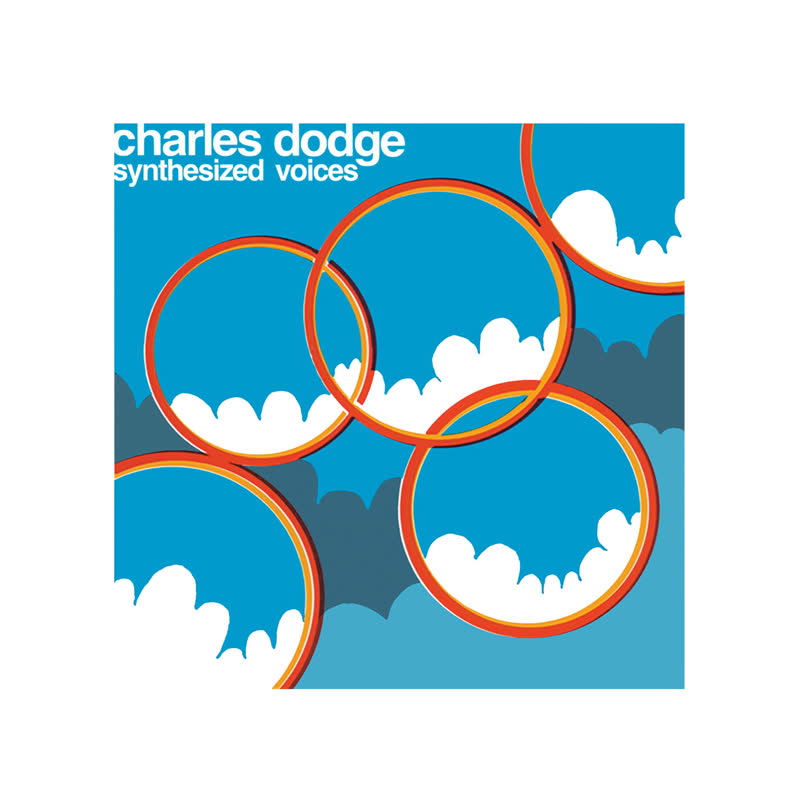
Charles Dodge
Synthesized Voices
Death Is Not The End - Cat No: DEATH135LP
- updated:2026-10-16
Charles Dodge, a legendary early American computer music and electronic music composer, used a mainframe computer equipped with voice analysis and synthesis technology developed at Bell Labs to analyze and deconstructed, and mathematically reconstructed to create a synthesized vocal piece. This masterpiece of electronic music—"Synthesized Voices" (1976)—features eerie, mysterious, and strange robotic voices that create a dizzyingly unique, groundbreaking, and unconventional sound, and is now being reissued for the first time as a limited-edition analog LP by Death is Not The End.
Track List
-
1. In Celebration
08:31 -
2. Speech Songs I: When I Am with You
01:38 -
3. Speech Songs II: He Destroyed Her Image
02:02 -
4. Speech Songs III: A Man Sitting in the Cafeteria
01:29 -
5. Speech Songs IV: The Days are Ahead
02:02 -
6. The Story of Our Lives I: We Are Reading the Story of Our Lives
05:18 -
7. The Story of Our Lives II: We are Reading the Story of Our Lives
02:49 -
8. The Story of Our Lives III: This Morning I Woke and Believed
01:57 -
9. The Story of Our Lives IV: Before You Woke
01:40 -
10. The Story of Our Lives V: If Only There Were A Perfect Moment in the Book
03:16 -
11. The Story of Our Lives VI: The Day Goes On
01:06 -
12. The Story of Our Lives VII: The Book Will Not Survive
02:26
Human voice recordings are mathematically analyzed and deconstructed, resulting in a mysteriously eerie and unique computer-synthesized voice that evokes a science-fiction-like, dreamy atmosphere.
*******
The tracks included here were created between 1972 and 1975 through work involving computer-synthesized speech, singing, and vocal resonances. This music was realized on two distinct computer music systems, representing an attempt to expand and explore their possibilities while leveraging the characteristics of each system. The system used to create the “speech songs” was originally developed at Bell Telephone Laboratories for research into synthetic speech and voice communication. Since it was not intended for music production, it had significant limitations, making its use in music a difficult (yet, for that very reason, rewarding) challenge. On the other hand, the systems used in *In Celebration* and *The Story of Our Lives* were designed with the explicit purpose of generating synthetic musical voices and were far better suited to this task. As is typical of projects requiring advanced technology, the creation of these works involved a wide range of collaborative efforts.
The works included on this disc are referred to as “computer music” because the sounds were generated as numerical values inside the computer before reaching magnetic tape or speakers. The computer did not compose the music. Rather, it was used solely as a medium for synthesizing and analyzing sound. In order to actually hear the sounds—which were represented as sequences of numerical values within the computer—it was necessary to connect a D/A converter (digital-to-analog converter) to the computer. This converter transformed the sequences of numerical values into voltage fluctuations, and that signal was recorded directly onto audio tape.
The technology used to generate synthesized speech is called “speech synthesis-by-analysis.” With this method, only words, phrases, and sentences that have been pre-inputted into the computer (via an A/D converter) can be synthesized. First, the digitally recorded audio is analyzed by a program, and speech attributes (parameters) are extracted in short time intervals (0.01 seconds). Using these parameters, it is possible to reproduce speech that is extremely close to the original recording. However, in music production, it is common for these parameters to be modified before synthesis takes place. For example, it is possible to transform the natural pitch curve of the speech into a melodic line, or to change the speech rate while maintaining the natural pitch.
The diversity of musical patterns that can be generated from the parameters obtained through analysis is limitless, depending only on the composer’s imagination. Most of the audio in the recording was created by altering the pitch and duration attributes of the original audio during resynthesis, but for some audio segments, the resonance characteristics (formants) were also modified. The “book” voice in *The Story of Our Lives* was created by replacing a program that simulates human vocal cords with a program consisting of 64 sine waves glissandoing at different speeds. All textures in which multiple voices are heard were obtained by digitally mixing the synthesized voices.
— Charles Dodge, 1976 (Original Japanese text by COMPUMA)