

- LP
- Pick Up
- Recommended
- New Release
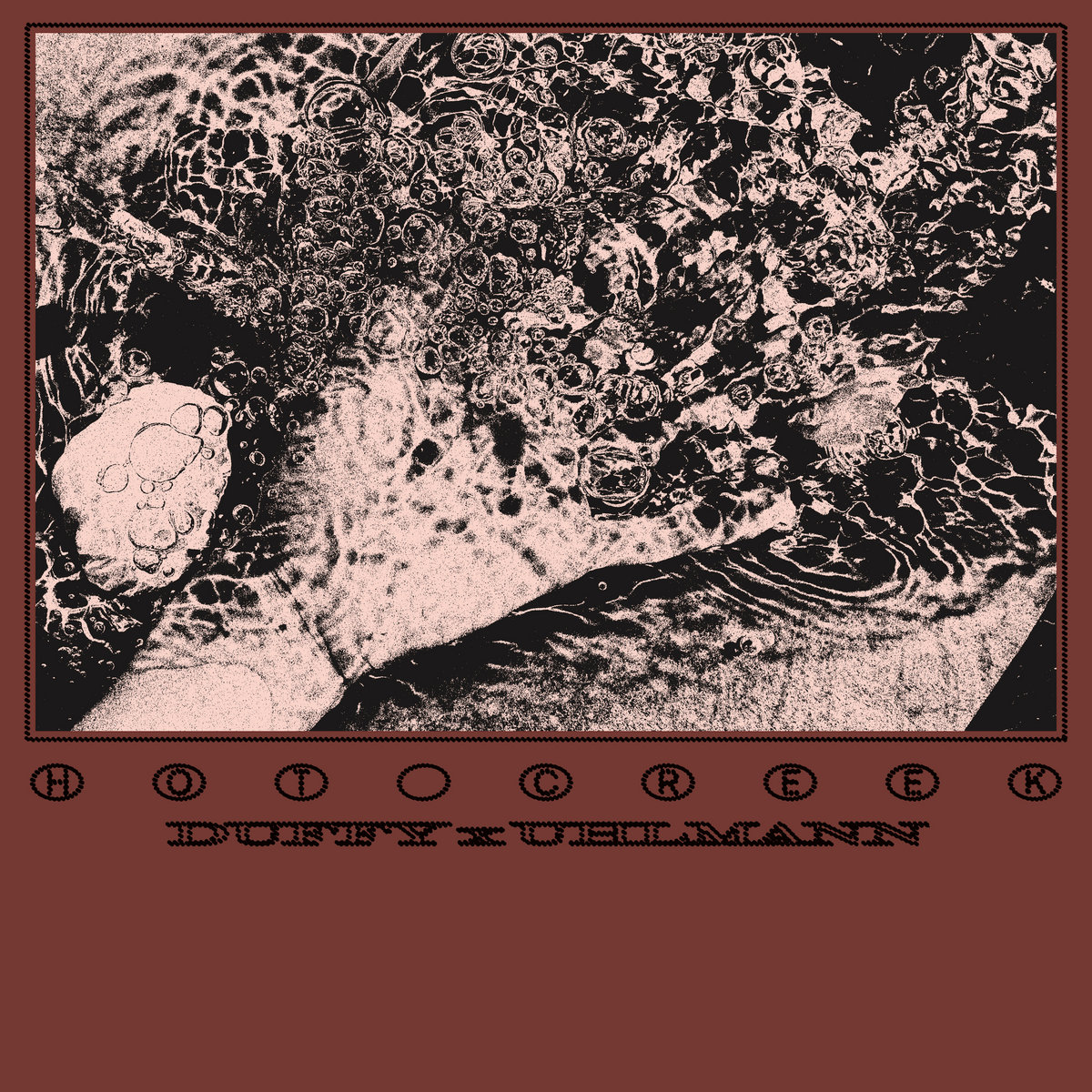
Duffy x Uhlmann
Hot Creek
Orindal Records
- Cat No: ORD-82
- updated:2026-09-27
ロサンゼルスの先鋭ロック、ジャズ・シーンで活躍、ソロやSMLなどのメンバーとして〈International Anthem〉からもリリースしているGregory Uhlmannと、NYCからLAに移って活動している元Hand Habitsでyes/and名義のアルバムが当店でも人気だったMeg Duffyの二人によるDuffy x Uhlmanの2作目のアルバム。二人のギターをメインに、地熱温泉「ホット・クリーク」というメタファー、詩人エイドリアン・リッチの言葉などにインスパイアされたという晴らしいサウンドを展開しています。二人のポリフォニーと調和。反復、周期、音響。キックもベースもないけれど、リズミック、ダンス・ミュージックだと思います。シカゴの〈Orindal Records〉からアナログ入荷しています。(サイトウ)
Track List
“A last attempt: the language is a dialect called metaphor.
These images go unglossed: hair, glacier, flashlight.
When I think of a landscape I am thinking of a time.
When I talk of taking a trip I mean forever.
I could say: these mountains have a meaning
But further than that I could not say.
To do something very common, in my own way.”
– Adrienne Rich, “A Valediction Forbidding Mourning”
Hot Creek, the second album from Meg Duffy and Gregory Uhlmann’s project Duffy x Uhlmann, unspools in the spirit of what poet Adrienne Rich called “a dream of a common language.” Taking Hot Creek, the geothermal spring that courses through Mono County, California, as its guiding metaphor, Duffy and Uhlmann’s melodic conversation both carves out a streambed and fills it with all temporalities of water: rapid, eddy, flood. In this sonic cartography, the waterway holds the trickling improvisations in the same way that grammar holds language, a container for what inevitably exceeds containment.
In this exquisite and existential elaboration of their collaboration, Duffy and Uhlmann develop the shared syntax initiated in their debut album Doubles. With only two guitars, Hot Creek departs from the first album’s gritty, urban soundscape, touching down in the natural world to explore a different dream. Like the ancient Greek philosopher Heraclitus’s well worn adage that you can’t step in the same river twice, these songs chart constant change, loss, and discovery, eschewing staticness of place and space. Hot Creek traverses – with both mischievousness and grief – the fact of impermanence, slips of the tongue, valuing equally what is lost and what is found, and what is made new through evolutions of repetition.
The opening track, “Doing It for Me,” winks at the fact of collaboration: a palimpsest-like collective of two individuals trying to reach each other. Here, they establish a rhythmic base that feels like a time-lapse bloom and ends with a swirling gallop, and slowly introduce bubbling guitar riffs that pirouette before becoming part of the ensemble of inside jokes and shifting moods. “To Be a Good Friend” opens and closes with the sound of footsteps and muffled voices approaching and receding. Like any good conversationalist, Duffy and Uhlmann have mastered the art of crescendo, but also the art of trailing off. In other words, the art of withstanding the space between true connection and fundamental mysteriousness of the other. “Plumeria” follows with agile and sweet staccato, punctuated by bright and soothing pauses: so much is said in the space between the riffs.
From these caesuras, the album thematizes the relationship between any utterance and what it obscures. “Sewering” drops us underground, where echoing drips ricochet through rusted pipes and crickets sing in the dark. We listen to “Public Life” from below, a soothing melancholic interlude of seeing and being seen that alludes to the currents underneath. This tentative lullaby culminates with the twang of the title track, “Hot Creek” and “The Source,” which slow everything to a near-hypnotic suspension, all while turning wide-eyed toward origin, centering the wonder of hearing a song before it hardens into predetermined meaning. This is musical language getting born, leading us to ask where does the water come from? Where does the love go? To answer these questions, the album widens into deep time with “Finding Methuselah,” which ricochets and reverbs notes between a four thousand year old tree aching on a hillside in Inyo County and the Milky Way itself.
Duffy and Uhlmann’s Hot Creek gives us the gift of listening to the birth of a common language in real time. Their melodies and rhythms move with the sweet vernacular of geothermic water and all its earthly infrastructures, accomplishing the profound potential of nonauthorship only collaboration allows, while also in Rich’s words, doing something very common, in their own way.
– Rosie Stockton
These images go unglossed: hair, glacier, flashlight.
When I think of a landscape I am thinking of a time.
When I talk of taking a trip I mean forever.
I could say: these mountains have a meaning
But further than that I could not say.
To do something very common, in my own way.”
– Adrienne Rich, “A Valediction Forbidding Mourning”
Hot Creek, the second album from Meg Duffy and Gregory Uhlmann’s project Duffy x Uhlmann, unspools in the spirit of what poet Adrienne Rich called “a dream of a common language.” Taking Hot Creek, the geothermal spring that courses through Mono County, California, as its guiding metaphor, Duffy and Uhlmann’s melodic conversation both carves out a streambed and fills it with all temporalities of water: rapid, eddy, flood. In this sonic cartography, the waterway holds the trickling improvisations in the same way that grammar holds language, a container for what inevitably exceeds containment.
In this exquisite and existential elaboration of their collaboration, Duffy and Uhlmann develop the shared syntax initiated in their debut album Doubles. With only two guitars, Hot Creek departs from the first album’s gritty, urban soundscape, touching down in the natural world to explore a different dream. Like the ancient Greek philosopher Heraclitus’s well worn adage that you can’t step in the same river twice, these songs chart constant change, loss, and discovery, eschewing staticness of place and space. Hot Creek traverses – with both mischievousness and grief – the fact of impermanence, slips of the tongue, valuing equally what is lost and what is found, and what is made new through evolutions of repetition.
The opening track, “Doing It for Me,” winks at the fact of collaboration: a palimpsest-like collective of two individuals trying to reach each other. Here, they establish a rhythmic base that feels like a time-lapse bloom and ends with a swirling gallop, and slowly introduce bubbling guitar riffs that pirouette before becoming part of the ensemble of inside jokes and shifting moods. “To Be a Good Friend” opens and closes with the sound of footsteps and muffled voices approaching and receding. Like any good conversationalist, Duffy and Uhlmann have mastered the art of crescendo, but also the art of trailing off. In other words, the art of withstanding the space between true connection and fundamental mysteriousness of the other. “Plumeria” follows with agile and sweet staccato, punctuated by bright and soothing pauses: so much is said in the space between the riffs.
From these caesuras, the album thematizes the relationship between any utterance and what it obscures. “Sewering” drops us underground, where echoing drips ricochet through rusted pipes and crickets sing in the dark. We listen to “Public Life” from below, a soothing melancholic interlude of seeing and being seen that alludes to the currents underneath. This tentative lullaby culminates with the twang of the title track, “Hot Creek” and “The Source,” which slow everything to a near-hypnotic suspension, all while turning wide-eyed toward origin, centering the wonder of hearing a song before it hardens into predetermined meaning. This is musical language getting born, leading us to ask where does the water come from? Where does the love go? To answer these questions, the album widens into deep time with “Finding Methuselah,” which ricochets and reverbs notes between a four thousand year old tree aching on a hillside in Inyo County and the Milky Way itself.
Duffy and Uhlmann’s Hot Creek gives us the gift of listening to the birth of a common language in real time. Their melodies and rhythms move with the sweet vernacular of geothermic water and all its earthly infrastructures, accomplishing the profound potential of nonauthorship only collaboration allows, while also in Rich’s words, doing something very common, in their own way.
– Rosie Stockton

『 「最後の試み:その言葉は『比喩』と呼ばれる方言だ。 これらのイメージには説明文がない――髪、氷河、懐中電灯。 風景を思い浮かべるとき、私はある時代を思い浮かべている。 『旅に出る』と言うとき、私は『永遠』を意味している。 こう言えるかもしれない――『これらの山々には意味がある』と。 だが、それ以上は言葉にできない。 ごくありふれたことを、私なりのやり方で。」 ――エイドリアン・リッチ『哀悼を禁ずる別れの言葉』 メグ・ダフィーとグレゴリー・ウルマンによるプロジェクト「ダフィー×ウルマン」の2作目となるアルバム『Hot Creek』は、詩人エイドリアン・リッチが「共通言語の夢」と呼んだ精神に則って展開される。 カリフォルニア州モノ郡を流れる地熱温泉「ホット・クリーク」を主要なメタファーとして、ダフィーとウルマンのメロディックな対話は、川床を刻み出すと同時に、急流、渦、洪水といった水のあらゆる時間性をそこに満たしていく。 この音響的な地図において、水路は、文法が言語を支えるのと同じように、ポタポタと流れる即興を包み込み、必然的にその枠を超えざるを得ないものを収める容器となっている。 この絶妙かつ実存的なコラボレーションの展開において、ダフィーとウルマンはデビューアルバム『Doubles』で築き始めた共通の構文をさらに発展させている。たった2本のギターのみで構成された『Hot Creek』は、1作目の荒削りで都会的なサウンドスケープから一線を画し、自然界へと足を踏み入れ、新たな夢を探求している。 「同じ川に二度足を踏み入れることはできない」という古代ギリシャの哲学者ヘラクレイトスのよく知られた格言のように、これらの楽曲は、場所や空間の静止性を避け、絶え間ない変化、喪失、そして発見を描き出している。 『Hot Creek』は――いたずら心と悲しみの両方を帯びながら――無常という事実や、言葉の滑りを横切り、失われたものと見つかったもの、そして繰り返しの進化を通じて新たに生まれたものを等しく大切にしている。 オープニング・トラック「Doing It for Me」は、コラボレーションという事実を茶目っ気たっぷりに描いている。互いに手を伸ばし合おうとする二人の個人が織りなす、パリンプセストのような集合体だ。 ここでは、タイムラプスで咲き誇る花のようなリズムの基盤を築き、渦巻くような疾走感で締めくくりながら、沸き立つようなギター・リフを徐々に導入していく。そのリフはピルエットを踊るように動き、やがて内輪のジョークや移ろいゆくムードのアンサンブルの一部となっていく。 「To Be a Good Friend」は、近づいては遠ざかっていく足音とくぐもった声で始まり、終わる。優れた会話の達人らしく、ダフィーとウルマンはクレッシェンドの技法を極めているだけでなく、言葉を途切れさせる技法も習得している。言い換えれば、真のつながりと、他者の本質的な謎との間の空間に耐え抜く術である。 続く「Plumeria」は、軽快で甘美なスタッカートが特徴で、明るく心地よい休止がアクセントとなっている。リフとリフの間の空白に、多くのことが語られているのだ。 こうした休止点を通じて、このアルバムは、あらゆる発話と、それが覆い隠すものとの関係性をテーマとしている。 「Sewering」は私たちを地下へと誘い、そこでは錆びたパイプを伝って滴りの反響が跳ね返り、暗闇の中でコオロギが鳴いている。私たちは地下から「Public Life」を聴く。それは、見ることと見られることによる、心地よいメランコリックな間奏曲であり、地下を流れる潮流をほのめかしている。 この控えめな子守唄は、タイトル曲「Hot Creek」と「The Source」のトワンという音色で最高潮に達する。これらの曲は、すべてをほぼ催眠的な静止状態へと緩やかに導きつつ、原点へと目を大きく見開いて向き合い、曲があらかじめ決められた意味へと固まる前に、その曲を聴くという驚異そのものに焦点を当てている。 これは音楽という言語が誕生する瞬間であり、私たちに「水はどこから来るのか?」と問いかける。 愛はどこへ行くのか? これらの問いに答えるかのように、アルバムは『Finding Methuselah』で「深遠な時間」へと広がり、インヨ郡の丘陵で痛みに耐える樹齢4000年の木と、天の川そのものとの間で、音符が跳ね返り、反響し合う。 ダフィーとウルマンの『Hot Creek』は、共通言語が生まれる瞬間をリアルタイムで聴くという贈り物を私たちに与えてくれる。 彼らのメロディーとリズムは、地熱水とその地上のインフラ全体が紡ぐ甘美な方言とともに流れ、コラボレーションだけがもたらす「非作者性」の深遠な可能性を実現しつつ、リッチの言葉によれば、彼らなりの方法で「ごくありふれたこと」を成し遂げているのだ。 ――ロージー・ストックトン (インフォメーションより)』