

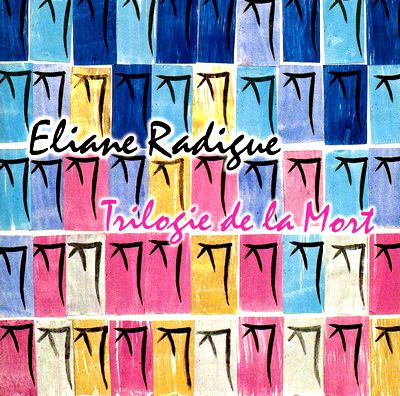
- 3CD
- Pick Up
- Recommended
Eliane Radigue
Trilogie De La Mort
XI
- Cat No: XI 119CD
- updated:2026-04-11
A masterpiece among masterpieces by electronic musician and drone artist Hélène Ladig, who passed away in February 2026 at the age of 94. A trilogy inspired by the three bardo stages of The Tibetan Book of the Dead. Unparalleled, beautiful music. A 3-CD set released in 1998 by the Experimental Intermedia Foundation. While all of her works are wonderful, this is a piece I’d like to reintroduce as the ultimate realization of a musical style characterized by keywords such as contemporary music, electronic music, experimental music, drone, ambient, New Age, and influences from Eastern philosophy. Try attuning your consciousness to the frequencies of the sound. We’ve stocked this directly from the label.
Track List
1998 release. Voted one of 1998's top 15 Records of the Year in Modern Composition by the writers and critics of The Wire, Trilogie de la Mort is a work in three parts for anolog Arp synthesizer. The first third of the work, Kyema, is inspired by The Tibetan Book of the Dead and invokes the six intermediate states that constitute the existential continuity of the being. Kailasha, the second chapter, is structured on an imaginary pilgrimage around Mt. Kailash, one of the most sacred mountains in the Himalayas. Koumé makes up the last part of the trilogy and emphasizes the transcendence of death.
Recordings of “Kyema” (recorded in 1988 at New Langton Arts in San Francisco using an Arp synthesizer), “Kailasha” (1991), and “Koumé” (recorded in 1993 at CIRM Studios in Nice, France).
“(Kyema) is inspired by The Tibetan Book of the Dead and the evocation of the six intermediate states that constitute the continuity of existence (I believe this relates to the bardo concept within the Six Realms of Rebirth).” Chapter 2, ‘Kailasha,’ is structured around an imaginary pilgrimage to Mount Kailash, one of the holiest mountains in the Himalayas (also known from the legend of the saint Milarepa, whom she deeply revered). ‘“Koumé” constitutes the final part of the trilogy and emphasizes the transcendence of death.’ (From the liner notes)
This is awakening and beautiful music that promotes the synchronization of consciousness, as sound waves intersect and interfere with one another, producing subtle undulations. Please experience it at a volume where you can sense the changing nuances of the sound and the shifts in vibration. Personally, this is the music that most deeply moved and influenced me when I first experienced it several years ago, and I have returned to it repeatedly ever since. The 16-page booklet includes liner notes with a contribution by David Berhman. (Original Japanese text by Saito)