

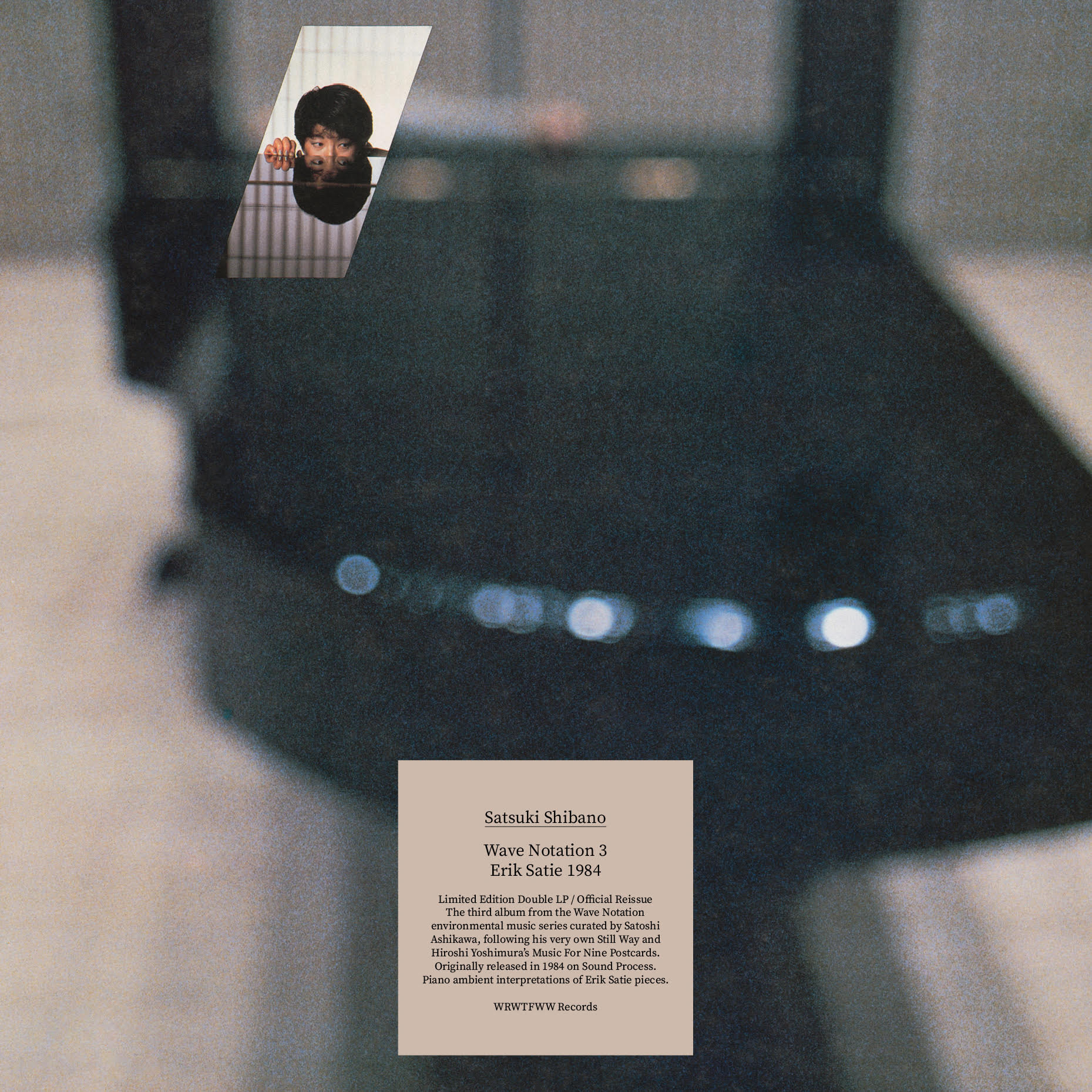
- 2LP
- CD
- Digital
- Recommended
- Back In
Satsuki Shibano
Wave Notation 3: Erik Satie 1984
WRWTFWW - Cat No: wrwtfww065
- Release: 2023-06-30
- updated:2025-02-11
芦川聡『Still Way』、吉村弘『Music For Nine Postcards』に続く、芦川聡キュレーションの環境音楽シリーズ「Wave Notation」の1984年最終作。渡仏後はサティ研究・演奏の第一人者J・J・バルビエに師事。パスカル・コムラードの曲をアレンジした作品も残しているピアニスト・音楽家柴野さつきによるエリック・サティのリサイタル。
Track List
-
1. Satsuki Shibano - La Balançoire (Sports et Divertissements) 1914
00:01:02 -
2. Satsuki Shibano - Berceuse (Enfantillages pittoresques) 1913
00:01:52 -
3. Satsuki Shibano - Caresse 1897
00:02:21 -
4. Satsuki Shibano - Ce que dit la petite princesse des tulipes (Menus propos enfantins) 1913
00:00:59 -
5. Satsuki Shibano - 5ème Gnossienne 1889
00:03:09 -
6. Satsuki Shibano - Colin-Maillard (Sports et Divertissements) 1914
00:00:58 -
7. Satsuki Shibano - Danses de travers (Pièces froides) 1897
00:04:46 -
8. Satsuki Shibano - 2ème Gnossienne 1890
00:02:20 -
9. Satsuki Shibano - 2ème Gymnopédie 1888
00:02:34 -
10. Satsuki Shibano - Harmonie 1895?
00:00:35 -
11. Satsuki Shibano - Idylle (Avant-dernières pensées) 1915
00:01:01 -
12. Satsuki Shibano - Idylle cynique (Préludes flasques
00:00:53) 1912 -
13. Satsuki Shibano - Lui manger sa tartine (Peccadilles importunes) 1913
00:02:05 -
14. Satsuki Shibano - La pêche (Sports et Divertissements) 1914
00:00:59 -
15. Satsuki Shibano - Petite ouverture à danser 1900
00:02:11 -
16. Satsuki Shibano - Petit prélude à la journée (Enfantillages pittoresques) 1913
00:00:56 -
17. Satsuki Shibano - Prière 1895?
00:01:38 -
18. Satsuki Shibano - 4ème Gnossienne 1891
00:03:51 -
19. Satsuki Shibano - 4ème Nocturne 1919
00:02:36 -
20. Satsuki Shibano - Rêverie du pauvre 1900
00:04:39 -
21. Satsuki Shibano - Son binocle (Les trois valses distinguées du précieux dégoûté) 1914
00:01:12 -
22. Satsuki Shibano - Songe creux 1906-08?
00:01:52 -
23. Satsuki Shibano - Sur un vaisseau (Descriptions automatiques) 1913
00:01:45 -
24. Satsuki Shibano - Tyrolienne turque (Croquis et agaceries dun gros bonhomme en bois) 1913
00:01:50 -
25. Satsuki Shibano - Vexation 1895?
00:01:43 -
26. Satsuki Shibano - Voix dintérieur (Préludes flasques
00:01:02) 1912
16bit/44.1khz [wav/flac/aiff/alac/mp3]
The highly sought-after album, sourced from the original master tape, is available as a double LP (housed in a luxurious heavyweight sleeve) for the first time ever. Digipack CD and digital formats are also available. This exclusive reissue, including English and Japanese liner notes by the artist, was supervised by Japanese ambient legend Yoshio Ojima.
Wave Notation 3 is a splendid tribute to seminal French composer and pianist Erik Satie, himself one of the main influences behind kankyo ongaku / environmental music (alongside Brian Eno, John Cage to name a few). The alphabetically-sequenced album features 26 pieces showcasing Shibano's unique piano interpretation of Satie’s works.
The artist explains: « For this album, I sequenced the compositions in alphabetical order of each title, irrespective of the period of each composition or style. By doing this, I attempted to effectively create ‘Music as an environment’ and at the same time, allow the listener to genuinely experience Satie’s music. »
Satsuko Shibano’s minimalistic approach to ambient classical is simply perfect and offers a beautiful and tranquil listening experience, furniture music with extra comfort and soothing simplicity, relaxing to the mind and to the soul. This Wave Notation deserves a spot among the pillars of Japanese environmental music, next to Midori Takada’s Through The Looking Glass, Hiroshi Yoshimura’s Green, and Satoshi Ashikawa’s Still Way.

「家具の音楽」の提唱者であり、日本のアンビエント・ミュージックに計り知れない影響を及ぼしているエリック・サティ(1866-1925)の作品を、80年代アンビエント・ミュージックの視点から捉え直したようなシンプルで豊かな表現。特徴的である、各楽曲の作曲年代やスタイルに関係なくアルファベット順に並べられた26曲のこのアルバムは、「『環境としての音楽』を生み出すと同時に、リスナーがサティの音楽を純粋に体験できるように」されています。傾聴を促されるアンビエントが多い昨今、家具の音楽としての聴取体験をぜひ。とは言ってもじっくりも聴きたいもの。高橋悠治や工藤冬里の演奏と聴き比べてみるのも面白いかと思います。オリジナルのマスターテープを使用し、尾島由郎の監修の元制作。英語と日本語によるアーティスト自身のライナーノーツが付属。 (足立)