

- LP
- CD
- Recommended
- Back In
Takao
The End of the Brim
Em Records - Cat No: EM1220LP
- updated:2025-10-30
Takao returns with a long-awaited new album that has been years in the making. Aspiring to a universal listenability, 'The End of the Brim' turns away from the abstract elements of its predecessor 'Stealth' and focuses instead on songs with concrete strength, supple rhythms, unfolding melodies, and refined harmonies. Takao's forward-looking vision elevates this record into a timeless, one-of-a-kind work that points toward a possible world for pop music. Yuji Shibasaki's liner notes, decoding this curious album of "non-absolute music," are essential reading!
Track List
-
01. Long
-
02. Mar
-
03. Music Room (Voc. 堀池ゆめぁ )
-
04. ARP
-
05. SPE
-
06. Images
-
07. Fall (Voc. クリステル・ベレ )
-
08. CF
-
09. Main Theme (Voc. 藤本敦夫 )
-
10. The End of the Brim
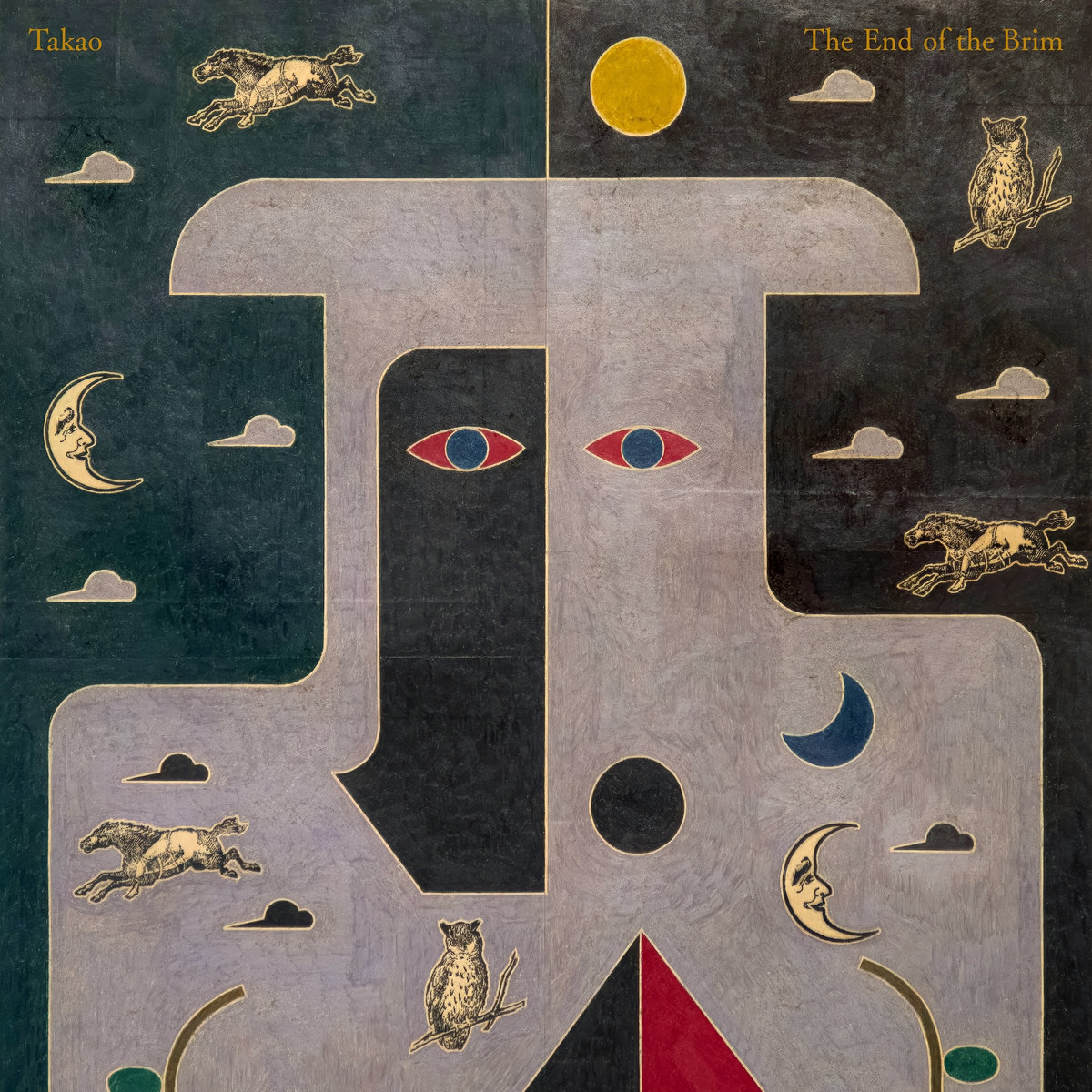
Following 'Stealth' (2018) and its self-remake 'Stealth (Gold Edition)' (2021), 'The End of the Brim' is his third album overall and his second consisting entirely of new material. Work on it began right after the release of 'Stealth.' Envisioning a landscape different from 'Stealth,' which was a total piece assembled from miniatures, Takao aimed for a world in which each individual song stands on its own with real strength. Because this was an unprecedented undertaking for him, he needed collaborators and brought in DJ eminemsaiko as supervisor. Through repeated trial and error with this team, vocalists Yumea Horiike ("Music Room"), Christelle Bellet ("Fall"), and Atsuo Fujimoto of Colored Music ("Main Theme") joined the project, along with Motoi Kawabe of mitsume and engineer Hiroshi Haraguchi, known for his work with Haruomi Hosono and Moonriders, as the album was meticulously sculpted into shape. Formally, 'The End of the Brim' is a "solo" album, the kind of record that is supposed to express something personal about a musician, yet its mode of expression is not direct: embedded within it is Takao's singular intent to pay homage to the commercial working composer who takes on commissioned assignments. The result is a layered work that proceeds through a doubled and tripled procedure—program music in which the artist is his own client and expresses himself as that client, attempting to describe his musical ideals through the concept of the working composer as objective executor. We sincerely hope it becomes a quiet favorite in your listening life for years to come. Cover artwork by Toru Otani, design by Kei Sakawaki.