

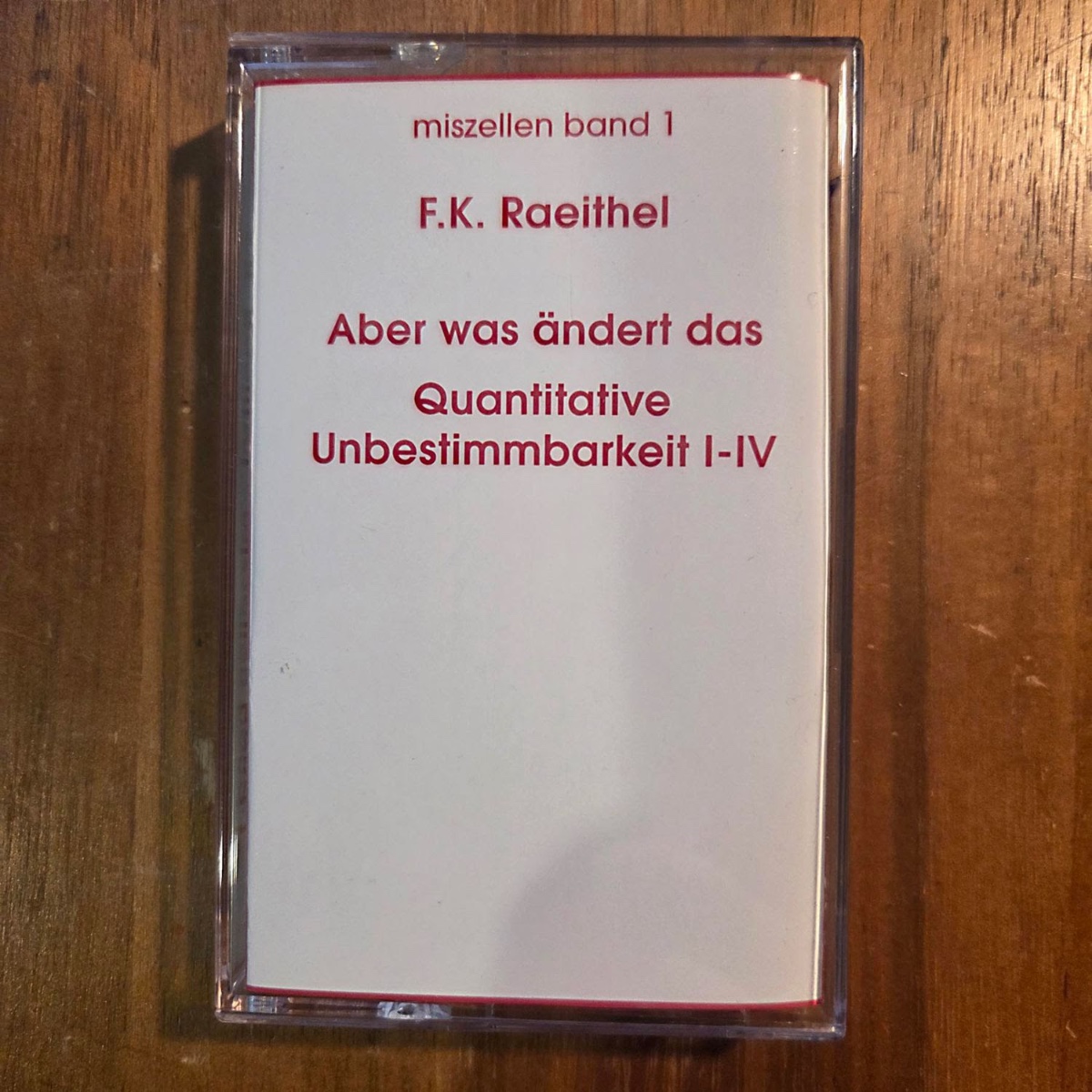
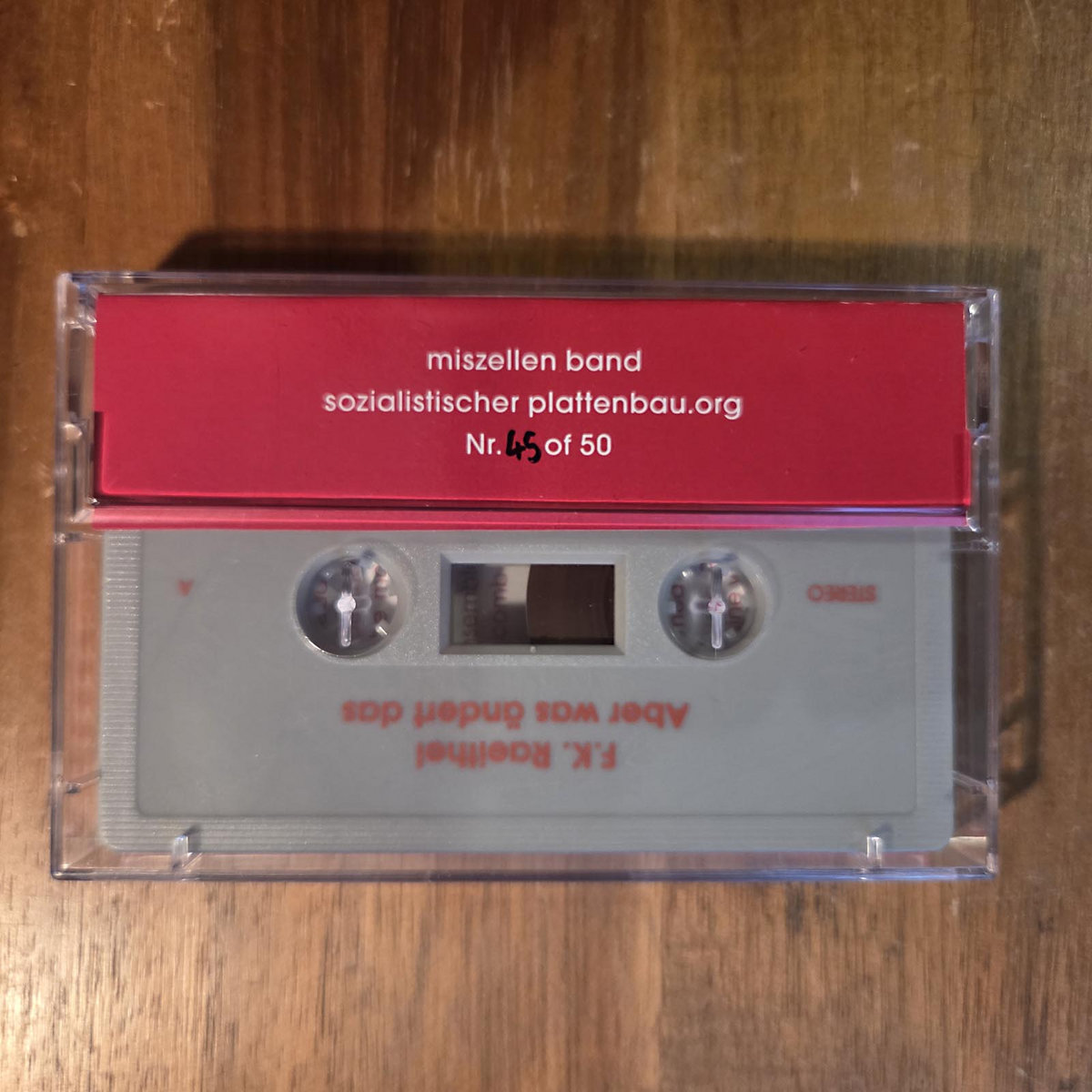
- Casette
- Recommended
- New Release
F.K. Raeithel
Aber Was Ändert Das? / Quantitative Unbestimmbarkeit I–IV
sozialistischerplattenbau - Cat No: MISZELLENBAND1
- updated:2026-09-16
A unique, rhythmic electro-acoustic work by Hamburg, Germany-based modular synthesizer player and electronic musician F.K. Raeithel is being released as a limited-edition cassette by sozialistischerplattenbau, run by Prince Istari! Limited to 50 hand-numbered copies.
Track List

A 23-minute-and-30-second-long piece featuring modulated, looping audio tape and electronic sounds from two oscillators that gradually transform, subtly and gently drawing the listener into a strangely captivating world where the storytelling captivates—a minimalist/dub experimental electronic soundscape. “Aber Was Ändert Das? (What Does That Change?)” (sample1), sine waves generated by three function generators programmed to provide mutual feedback, and the four-part electro-acoustic series “Quantitative Unbestimmbarkeit 1&2&3&4,” created using self-generating patches, are all enveloped in a laid-back, mysteriously pleasant atmosphere. (Original Japanese text by COMPUMA)