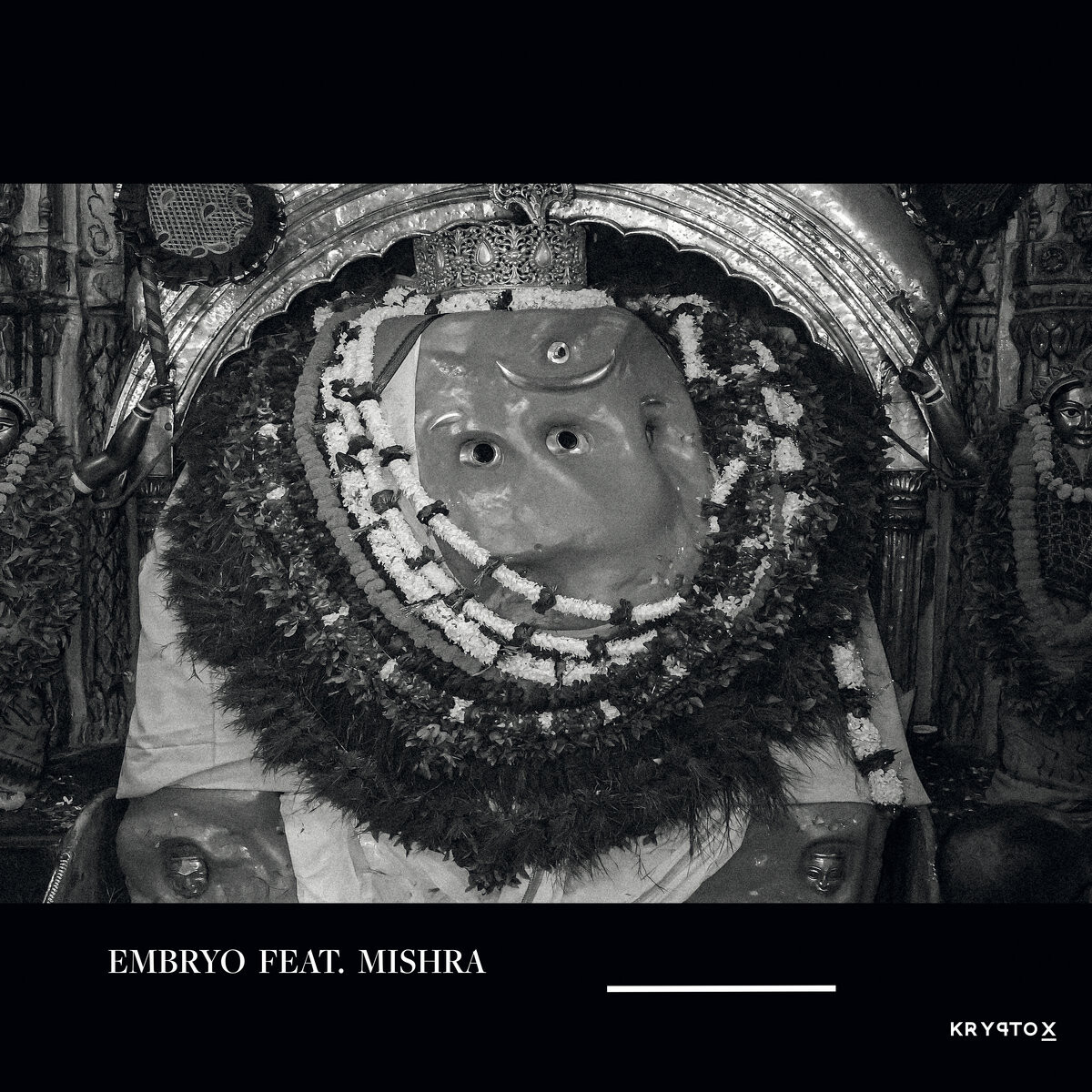
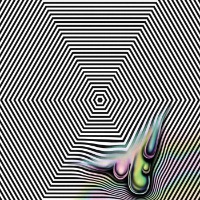
A new album by Embryo—the legendary German rock and jazz-rock band formed in 1969 that continues to this day in various forms—has been released on vinyl via “Kryptox,” a sub-label of “Toy Tonics.” The album features sitar player and singer Deborata Mishra and his nephew, Prashant Mishra, on tabla. (Saito)
▫️information▫️ 『Embryo – new album on Kryptox / Toy Tonics For more than five decades, Embryo has been moving between worlds. Founded in Munich in 1969, the internationally connected collective is not a conventional band but a living organism: Kraut rock dissolves into jazz, free improvisation merges with inner- and outer-European rh...Read moreythms, and sound rituals from distant cultures meet urban avant-garde. Generations, genres, and borders blur—driven by an openness that has always made Embryo singular. After legendary collaborations with figures such as Mal Waldron, Okay Temiz, Fela Kuti, and Charlie Mariano, the spirit of the group continues today in a renewed form. Since 2015, Marja Burchard, daughter of founder Christian Burchard, has carried Embryo forward—guided by curiosity, wanderlust, and an unrelenting desire to embrace new musical ways of thinking. On this album, released on Toy Tonics’ sublabel Kryptox, decades-long friendships crystallize into a shimmering weave of melody, pulse, and improvisation. Embryo joins forces here with Indian musicians Deobrat Mishra and Prashant Mishra, with whom they have shared musical paths for more than fifteen years. Their first encounter with Christian Burchard and Embryo in 2008—during a concert at Zurich’s Wasserkirche—marked the beginning of a deep and lasting sonic kinship. The recordings were made in 2023 at Minga Records Studio in Munich with Tobias Siegert. Special guests add further luminous colors: Niko Schabel on The Gift and Moonwalk, Kolkata-born singer Dr. Chandreyee Maitra on Rivers, and Bangalore-based bansuri player Dattatreya Desai on Mishra Dance. The core lineup of the album forms an alchemical circle: Marja Burchard on vibraphone, Maasl Maier on bass and flute, Jakob Thun on drums—together with the Varanasi-born sitar virtuoso and vocalist Deobrat Mishra and his nephew Prashant Mishra on tabla. Deobrat Mishra is widely regarded as one of India’s most energetic and innovative sitar players—a representative of the eleventh generation of the Benares gharana tradition, whose playing glows with melodic finesse and rhythmic intricacy. Prashant Mishra, meanwhile, stands among the most outstanding young tabla masters of the same lineage: precise, fiery, yet deeply sensitive and supportive. Together they stretch a sonic arc from centuries-old tradition into the vibrating present. This album is not merely a meeting of musicians—it is a ritual of wood, metal, skin, and breath. A quiet spell that grows into ecstatic dance. A global dialogue that begins in Munich and radiates outward in countless directions. Embryo on Kryptox: a new chapter in an endless journey—shimmering, borderless, and open as the horizon itself. 』
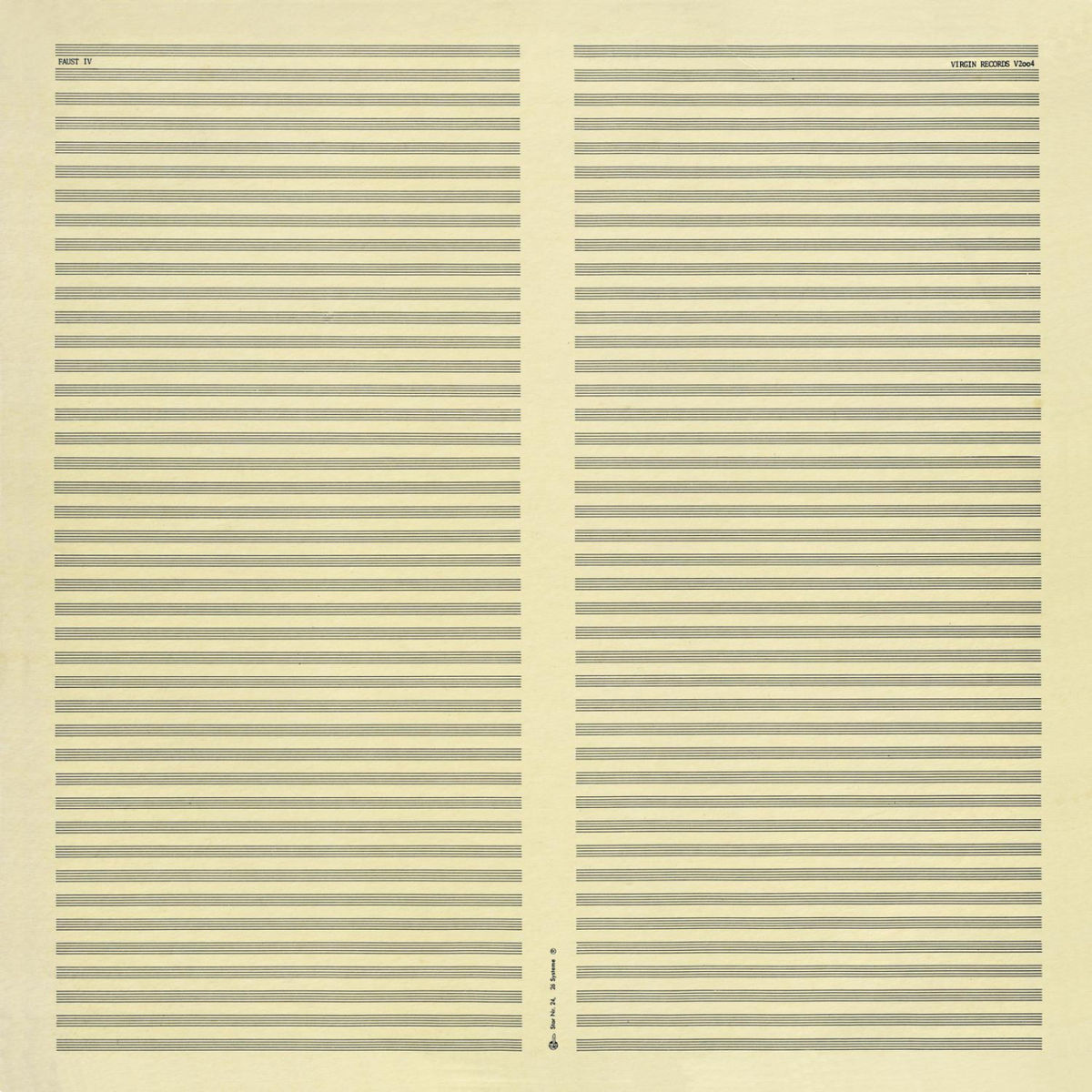
Drone, noise, feedback, tape edits, electronics, improvisation — and strangely catchy songs. "Faust IV," the signature work in which Faust dismantled the rock format and built music that sounds like no one else. Essential listening if you have any interest in krautrock, psychedelic rock, or avant-garde sound.
Formed in Hamburg in 1969, Faust stood alongside Can, Neu! and Kraftwerk as one of the defining acts of 1970s German experimental rock/krautrock. Released in 1973, "Faust IV" was the final album of the band's early period, and it crystallizes their singular musical vision in vivid fashion. Running over eleven minutes, "Krautrock" is, despite its...Read more (Original Japanese text by Saito) title, nothing like typical krautrock. Rhythm gradually rises out of low sustained drones and uneasy noise, with the very mass of sound slowly transforming. From there the album pivots to the oddball pop of "The Sad Skinhead" and the beautiful melody of "Jennifer," then tangles up tape edits, electronic tones and collage-like fragments. It moves between experimental music, rock, psychedelia and pop with astonishing freedom. Rather than simply performing songs, Faust treated the studio itself as an instrument, assembling music out of chance, noise and editing — an approach that would feed directly into later industrial, noise, ambient and electronic music. Though it's more than 50 years old, it still sounds fresh placed next to today's experimental electronics and indie music. Officially licensed BUREAU B reissue (2025), remastered with liner notes by Patrick Ryder, who joined the band at the time of their reunion. (Original Japanese text by Saito)
Released in 1971, Faust — a landmark album in the history of krautrock — has been reissued on white vinyl by Hamburg's esteemed label Bureau B!
In 1969, at the instigation of cultural journalist Uwe Nettelbeck, the band was formed by six musicians drawn from the ranks of Nukleus and Campylognatus Citelli: Jean-Hervé Péron, Rudolf Sosna, Gunther Wüsthoff, Hans-Joachim Irmler, Werner "Zappi" Diermaier, and Arnulf Meifert. Bankrolled by Polydor Germany, they lived and worked communally in a c...Read more (Original Japanese text by hamon)onverted schoolhouse in Wümme, Lower Saxony, following their curiosity wherever it led as they discovered an entirely new musical language — and this record is the document of that very process. Possessed of a self-contained logic and a radical spirit, it fuses German electronics, minimalism, the avant-garde, improvised structures, and surrealist collage into a musical culture all its own. (Original Japanese text by hamon)
A masterpiece by MOEBIUS and ROEDELIUS released on SKY RECORDS. A Krautrock masterpiece that has stood the test of time.
A historic, definitive masterpiece by CLUSTER—the electronic music band formed by Moebius and Roedelius. A blissful, psychedelic electronic trip that offers glimpses of polyrhythms and African tribal elements. MOEBIUS and ROEDELIUS’s fourth album, recorded in 1976 for SKY RECORDS at CONNIE PLANK’s studio. An analog reissue from Bureau B. (Original Japanese text by Saito)
The starting point of Manuel Göttsching's career and a pinnacle of German psychedelia and krautrock: ASH RA TEMPEL's 1971 debut album. 50th anniversary edition, special sleeve, black vinyl.
Guitarist Manuel Göttsching, drummer Klaus Schulze, and bassist Hartmut Enke. Engineered by Conny Plank, recorded in March 1971 and released that June on the Ohr label, "Ash Ra Tempel" is a historic record. Black vinyl. Includes an A2 poster and insert sheet. A 50th anniversary edition supervised by Manuel Göttsching himself before his passing, with attention paid to every detail. (Original Japanese text by Saito)
ジャーマン・エレクトロニクスとクラウトロック、そしてニューエイジなサイケデリック・トリップ・セッション。現代のASH RA TEMPELかNEU!かTANGERINE DREAMかPOPOL VUHか!?MANUEL GOTTSCHINGか!?これはCD。
1960年代当時のクラウトロックを形作る母体となった伝説のベルリンのアート/音楽集団Zodiak Free Arts Labにインスパイアされたギリシア人ARGYのプロジェクト、その名もZODIAC FREE ARTS CLUBのデビューアルバム。オマージュと敬愛と発展。リリースはドイツ・バレアリックの名門Permanent Vacationより。クラブカルチャーを通過したメディテーションでオリエンタルな精神性とサイケデリックでトリップなクラウトロックを、このジャケットばりの、まさにFloatingな幻想的な世界観で表現してくれております。しかもアルバムタイトルは日本の浮世絵からとったということです。注目作。sample3のみ2曲。 (コンピューマ)






▫️information▫️
『Embryo – new album on Kryptox / Toy Tonics
For more than five decades, Embryo has been moving between worlds. Founded in Munich in 1969, the internationally connected collective is not a conventional band but a living organism: Kraut rock dissolves into jazz, free improvisation merges with inner- and outer-European rh ...Read moreythms, and sound rituals from distant cultures meet urban avant-garde. Generations, genres, and borders blur—driven by an openness that has always made Embryo singular.
After legendary collaborations with figures such as Mal Waldron, Okay Temiz, Fela Kuti, and Charlie Mariano, the spirit of the group continues today in a renewed form. Since 2015, Marja Burchard, daughter of founder Christian Burchard, has carried Embryo forward—guided by curiosity, wanderlust, and an unrelenting desire to embrace new musical ways of thinking.
On this album, released on Toy Tonics’ sublabel Kryptox, decades-long friendships crystallize into a shimmering weave of melody, pulse, and improvisation. Embryo joins forces here with Indian musicians Deobrat Mishra and Prashant Mishra, with whom they have shared musical paths for more than fifteen years. Their first encounter with Christian Burchard and Embryo in 2008—during a concert at Zurich’s Wasserkirche—marked the beginning of a deep and lasting sonic kinship.
The recordings were made in 2023 at Minga Records Studio in Munich with Tobias Siegert. Special guests add further luminous colors: Niko Schabel on The Gift and Moonwalk, Kolkata-born singer Dr. Chandreyee Maitra on Rivers, and Bangalore-based bansuri player Dattatreya Desai on Mishra Dance.
The core lineup of the album forms an alchemical circle:
Marja Burchard on vibraphone, Maasl Maier on bass and flute, Jakob Thun on drums—together with the Varanasi-born sitar virtuoso and vocalist Deobrat Mishra and his nephew Prashant Mishra on tabla.
Deobrat Mishra is widely regarded as one of India’s most energetic and innovative sitar players—a representative of the eleventh generation of the Benares gharana tradition, whose playing glows with melodic finesse and rhythmic intricacy. Prashant Mishra, meanwhile, stands among the most outstanding young tabla masters of the same lineage: precise, fiery, yet deeply sensitive and supportive. Together they stretch a sonic arc from centuries-old tradition into the vibrating present.
This album is not merely a meeting of musicians—it is a ritual of wood, metal, skin, and breath. A quiet spell that grows into ecstatic dance. A global dialogue that begins in Munich and radiates outward in countless directions.
Embryo on Kryptox:
a new chapter in an endless journey—shimmering, borderless, and open as the horizon itself.
』